
News
Pink Floyd Football Club: The Band’s Wild Soccer Story
Long before Sony’s collaboration with Inter Milan turned heads across the football world, Pink Floyd had their own real football team. Every Sunday morning in the early 1970s, the band traded studio sessions and stage lights for muddy London parks, kicking a ball around with a competitive streak that occasionally drew blood. This is the true story of the Pink Floyd Football Club, better known to those who were there as the Pink Floyd First XI.
Table of Contents
Sunday Mornings in the Park: How It All Started
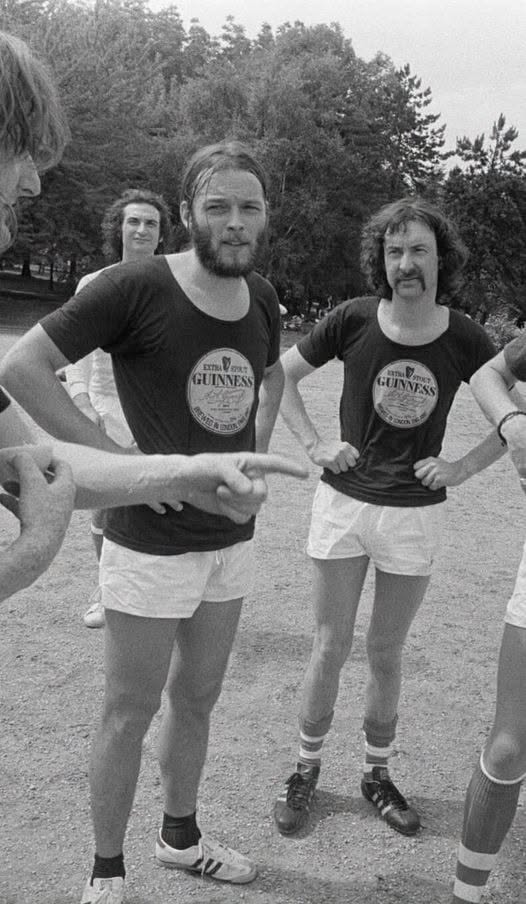
In the early ’70s, Pink Floyd was juggling studio work and touring, but the band still carved out time for something completely unrelated to music: casual football matches in London’s parks. What started as a way to unwind quickly took on a life of its own. The Pink Floyd First XI played against anyone willing to take them on, record label staff, the musicians of Family, dancers from Roland Petit’s ballet company, and, in one match nobody who was there ever forgot, a team of Marxists from North London.
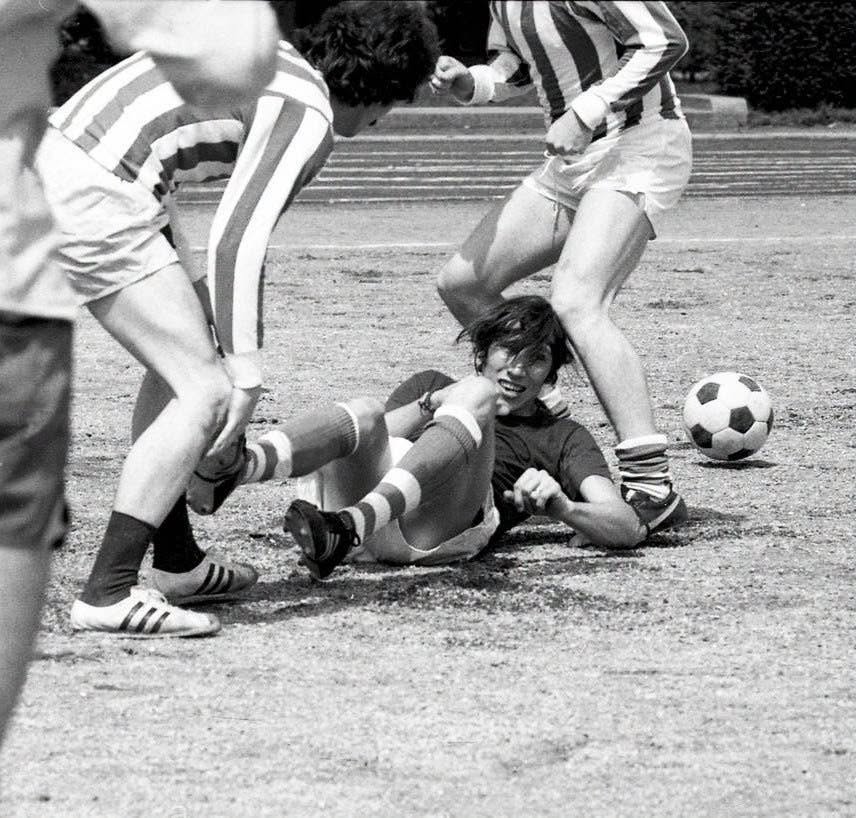
That particular game ended 4-0 in favor of the Marxists, and David Gilmour was rushed to the hospital to get stitches after a brutal clash left him with a bloodied tongue. Sunday league football, it turns out, could be just as unforgiving as a world tour.
The Band’s Line-Up on the Pitch
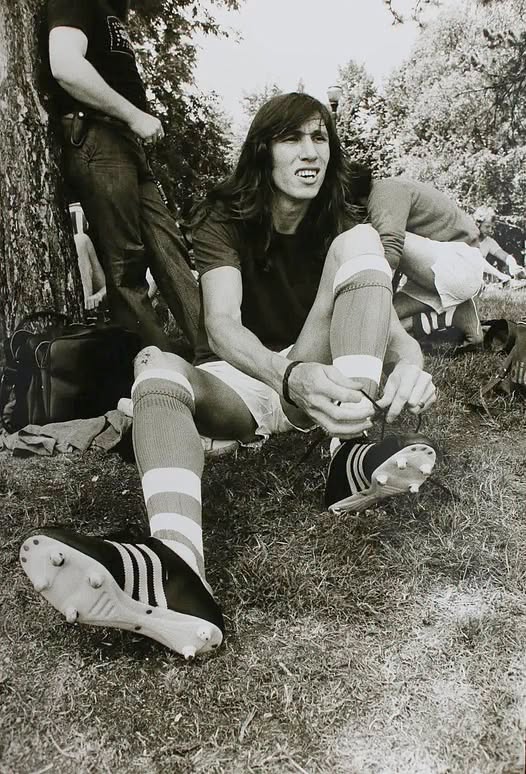
The positions the band members took on the field said a lot about their personalities. Roger Waters did a bit of everything, but mostly played goalkeeper, and by all accounts he was fiercely competitive out there. Nick Mason later recalled the difference in skill level bluntly: “David was a good player, as was Roger, who was extremely combative on the pitch. Rick and I were, let’s say, less enthusiastic. The only team we ever managed to put under real pressure was Roland Petit’s dancers, because they had to protect their legs at all costs.”
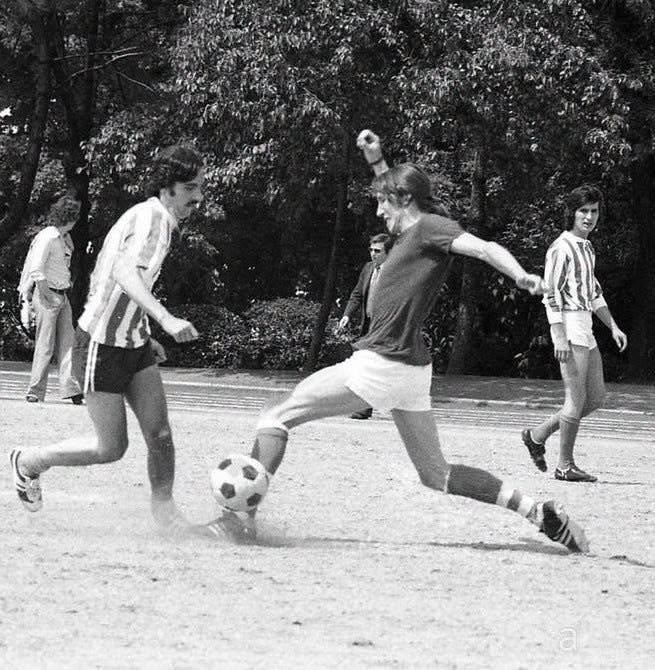
Gilmour held things down in defense, dubbing himself “Chopper Gilmour”, a tongue-in-cheek nod to Ron Harris, the notoriously hard-tackling English defender. Nick Mason and Richard Wright, meanwhile, drifted around positions nobody remembers with any precision, mostly because neither of them showed much appetite for the fight.
Interestingly, the footballing hierarchy flipped the musical one, at least in one respect: Waters was the better player. Gilmour admitted as much himself: “Roger was a better player than me. He had more technique. I didn’t play at school because we played rugby, but I was a decent defender – ‘Chopper’ Gilmour.”
The Match That Ended in Hospital, and on an Album Cover
That infamous 4-0 loss to the Marxist team, the one that sent Gilmour to the emergency room, ended up immortalized in Pink Floyd history. The earliest photographic evidence of the Pink Floyd First XI appears on the cover of A Nice Pair, the 1973/1974 double-album reissue of The Piper at the Gates of Dawn and A Saucerful of Secrets. The central image shows the full team from that very match: road manager Chris Adamson, lighting engineer Arthur Max, Roger Waters, sound collaborator Bob “Liverpool Bobby” Richardson, sound engineer and road manager Peter Watts, and manager Steve O’Rourke standing; Nick Mason, agent Tony Howard, Richard Wright, Hipgnosis co-founder Storm Thorgerson, and David Gilmour seated.
You Might Also Like


From Football Talk to Wish You Were Here
The band’s love of football didn’t stay confined to the park. In 1975, singer-songwriter Roy Harper was recording his album HQ at Abbey Road and ended up, almost by accident, singing lead vocals on Pink Floyd’s “Have a Cigar.” Harper later remembered the Wish You Were Here sessions as a constant back-and-forth where music was often the last thing on anyone’s mind. “They’d take breaks, and all anyone talked about was football, Arsenal, mostly,” he said.
The tribute to the team went even further in 1979, when EMI released a box set titled Pink Floyd The First XI: eleven felt-lined LPs replicating the band’s first eleven studio albums, excluding The Wall, in a limited run of just one thousand copies. The name was a clear homage to the football club, eleven records standing in for the starting eleven on the pitch.
Fifty Years Later: Pink Floyd Meets Inter Milan
Half a century after those Sunday kickabouts, the story has come full circle in an unexpected way: a co-branded collaboration between Sony Music and Inter Milan, one of Italy’s most decorated football clubs. It’s a fitting twist for a band that’s always had a complicated relationship with commerce — back in 1974, a sponsorship deal with French soft drink brand Gini, which had the band shoot an ad campaign in the desert near Marrakesh, sparked real backlash from a progressive-rock fanbase that saw Pink Floyd as an anti-consumerist symbol. Waters even wrote an unreleased song about the episode, “Bitter Love.” The band claimed the fee went to charity; Nick Mason later admitted otherwise: “We didn’t give the money to charity. I think some of it went into production; we were pretty greedy back then.” The Inter Milan collaboration carries none of that old ideological weight, just a nice nod to the team’s own football history.
Wear the Story: Pink Floyd Merch for the True Fans
Whether it’s the goalkeeper gloves Roger Waters never actually wore or the “Chopper Gilmour” nickname, stories like this are exactly why Pink Floyd fandom goes so much deeper than the music. If tales like the First XI make you want to rep the band a little louder, our Pink Floyd t-shirt collection and hoodie collection are built for exactly that kind of fan, the ones who know the deep cuts and the deep-cut trivia. And if the A Nice Pair cover story stuck with you, our poster collection makes for a great way to bring a piece of that era into your space.
FAQ
Did Pink Floyd really have a football team?
Yes. In the early 1970s, the band played casual Sunday morning matches in London parks under the name Pink Floyd First XI, facing off against record label staff, other bands, and even a team of Marxists.
What is the Pink Floyd First XI?
It’s the nickname of the band’s real football team, later referenced in the title of a 1979 EMI box set collecting the band’s first eleven studio albums.
Was Roger Waters really the goalkeeper?
By most accounts, yes, Waters played a bit of everything but was most often in goal, and was known as the most competitive player on the team.
Conclusion
From bloodied tongues on a London park pitch to a box set homage and, decades later, a partnership with Inter Milan, the Pink Floyd Football Club story is a reminder that even rock legends had their own Sunday league drama. Keep the story going, explore our Pink Floyd blog for more deep-cut band history, and check out our full Pink Floyd merch collection to wear a piece of it.



