
News
Why Roger Waters Fired Richard Wright From Pink Floyd
In the summer of 1979, Richard Wright was fired from Pink Floyd, the band he had helped found fourteen years earlier, in the middle of recording their most successful album. Then came the twist nobody saw coming: when The Wall tour finally rolled out, the man who had just been pushed out was the only member of Pink Floyd who actually made money from it. This is the full story of how Richard Wright was fired from Pink Floyd, and how he ended up outlasting the man who fired him.
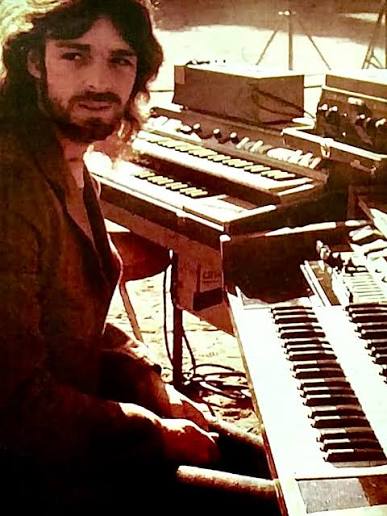
Table of Contents
The Quiet One: Who Richard Wright Was to Pink Floyd
Richard Wright helped form Pink Floyd in 1965 alongside Roger Waters, Nick Mason and Syd Barrett. He was never the frontman and never wanted to be. He was the atmosphere, the drifting chords under “Echoes,” the aching organ on “Us and Them,” the chord progression that Clare Torry’s wordless vocal was built on top of in “The Great Gig in the Sky,” the diaphanous synth washes threaded through “Shine On You Crazy Diamond.”
David Gilmour put it plainly after Wright’s death: without his quiet touch, Wish You Were Here would not have worked, and Pink Floyd’s greatest moments were the ones where Wright was in full flow. That is not sentimentality. Take Wright’s keyboards out of the Floyd catalogue, and you are left with a very good guitar band instead of the most atmospheric rock group of the twentieth century.
Which is exactly why what happened next is so hard to explain.
1978: A Band Already Cracking
Roger Waters Takes Control
On the final night of the Animals tour in Montreal in July 1977, Roger Waters leaned over the barrier and spat in the face of a fan who wouldn’t stop shouting. He was horrified at himself. Within two years he had turned that moment of disgust into a double album about a rock star who builds a wall between himself and his audience.
But The Wall was Waters’ vision, not the band’s. The Floyd of Dark Side of the Moon had been four people arguing their way toward something none of them could have made alone. By 1979 it had become one man’s concept album with three very expensive musicians hired to realise it. Adding to the pressure, the band’s finances had been gutted by a disastrous relationship with their investment advisors, and they were recording in tax exile abroad. There was no money and no margin for error.
Wright’s Personal Collapse
Wright arrived at those sessions with almost nothing left in the tank. His marriage to Juliette Gale was ending. His solo album Wet Dream, released in 1978, had not satisfied him, and he barely promoted it. He wanted to spend time with his children, which Waters read as a lack of commitment.
Years later, speaking to Classic Rock in 2000, Wright was candid about it: he admitted he had little to offer during that period, and said that looking back, he hadn’t realised at the time that he was depressed. That context matters. Wright wasn’t lazy; he was struggling, and he was struggling in a room that had no tolerance left for anyone struggling.
Why Richard Wright Was Fired From Pink Floyd
The Sessions Nobody Wanted to Be In
Six months into recording, Wright had contributed almost no new material to the album. But according to producer Bob Ezrin, that was only half the picture. Ezrin later told Rolling Stone that Wright was on the receiving end of what he described as Waters’ almost Teutonic cruelty, that no matter what Wright did, it was never good enough, and that it was obvious Waters had no interest in seeing him succeed.
Wright’s own read on it was blunter. By the time they started making The Wall, he said, Waters had come to believe that he was Pink Floyd, not just the leader, but that the others weren’t necessary at all. That, Wright said, was why he left.
The Ultimatum
The break came in the summer of 1979. Ezrin, working in Los Angeles, called for everyone to return for mixing. Wright was on holiday in Greece and refused to cut it short.
Waters’ response was an ultimatum, and he had the leverage to make it stick: either Wright resigned before the album was finished, or Waters would withhold the entire record from release. Given how deep in debt the band already was, that threat was not a bluff anyone could afford to test. Gilmour and Ezrin did not stand in the way. Wright agreed to go.
Technically, Richard Wright was never formally sacked. He resigned, under an ultimatum that left him no other option. Fired in all but name.
What Waters Has Said Since
It would be easy to write Waters as a pure villain here, and plenty of fans do. The fairer version is more uncomfortable. Waters was carrying a band that was financially underwater, working with a keyboardist who had effectively stopped contributing, and he genuinely could not absorb another delay. His method was brutal. His problem was real.
And when Wright died in 2008, Waters didn’t hedge. He said it was hard to overstate how important Wright’s musical voice had been to the Pink Floyd of the sixties and seventies. Whatever happened in 1979, Waters knew exactly what he had pushed out the door.
The Twist: The Fired Member Was the Only One Who Made Money
Here is where the story turns, and it is the detail that still makes Floyd fans laugh forty-five years later.
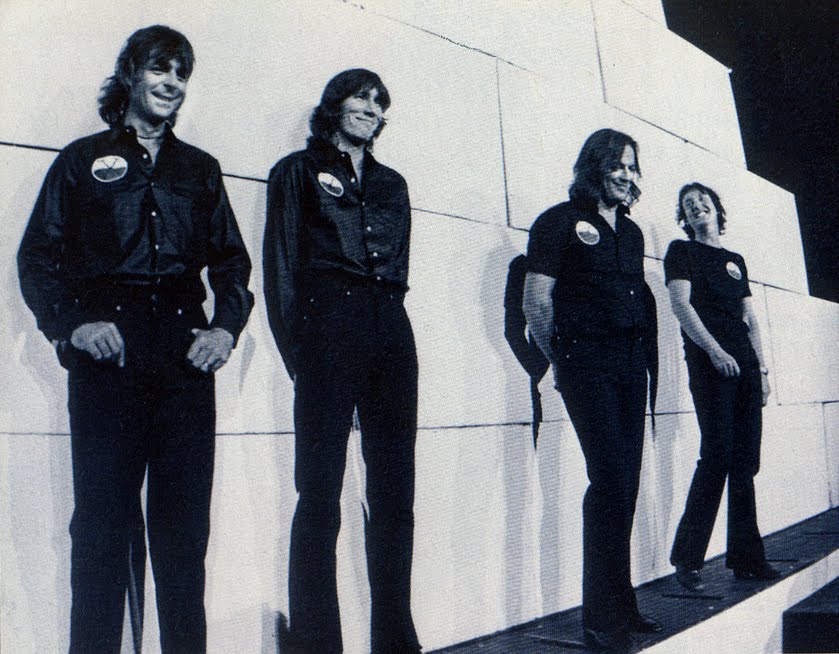
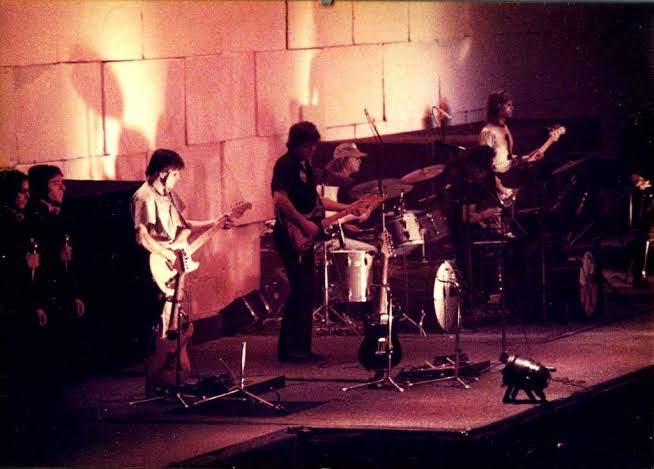
Wright was out of the band, but Pink Floyd still needed a keyboard player for the tour, and nobody could play those parts the way he could. So Waters rehired him for the 1980 and 1981 Wall shows as a salaried sideman on a flat fee. Wright accepted; he had children to support and no reason to refuse a wage.
Those shows were among the most extravagant ever staged: a wall built and demolished nightly, giant inflatables, Gerald Scarfe’s animations, a full second band. The cost was staggering, and Waters, Gilmour and Mason were personally on the hook for all of it. The tour lost money, at least in its first years.
You Might Also Like








Wright, on a fixed salary, carried none of that risk. Nick Mason later joked that Wright was the only one who came out of that tour in profit. The one man they had forced out was the one man who got paid.
Life After The Wall: The Wilderness Years
When Pink Floyd made The Final Cut in 1983, Wright was gone entirely. It remains the only Pink Floyd studio album he does not appear on, and it is not a coincidence that most fans regard it as the least Floyd-sounding record in the catalogue. It is a Roger Waters solo album wearing the band’s name.
Wright, meanwhile, drifted. He formed a duo called Zee with Dave Harris of the band Fashion and released one album, Identity, in 1984. It was a critical and commercial failure, and Wright himself later distanced himself from it. For a founding member of one of the biggest bands on earth, it was a long, quiet fall.
How Richard Wright Came Back to Pink Floyd
A Momentary Lapse of Reason (1987)
Roger Waters left Pink Floyd in 1985, assuming the band would die with his departure. Instead, Gilmour and Mason kept going, and Gilmour brought Wright back in.
But the return was not a full restoration. Because of contractual complications tied to the legal war Waters was waging over the Pink Floyd name, Wright rejoined for A Momentary Lapse of Reason as a paid player rather than a credited band member, and came in late in the recording process. He was back in the room, but not yet back in the band. This is a detail a lot of articles get wrong.
The Division Bell (1994): A Full Member Again
The real homecoming was The Division Bell. For the first time in fifteen years, Wright was credited as a full member of Pink Floyd, and he made it count. He co-wrote five songs on the album and sang lead vocals on “Wearing the Inside Out,” his first lead vocal on a Pink Floyd record since The Dark Side of the Moon in 1973.
Wright said afterwards that the difference was being there from the beginning rather than arriving halfway through, and you can hear it. His fingerprints are all over “Cluster One” and “Marooned”, exactly the kind of spacious, unhurried playing that had defined Floyd before The Wall squeezed it out. The Division Bell is the last Pink Floyd studio album of entirely new material, and the last recorded with Wright. It is also, arguably, his vindication.
Live 8, 2005
On 2 July 2005, Waters, Gilmour, Mason and Wright walked onto a stage in Hyde Park together for the first time in twenty-four years. It was the last time Pink Floyd would ever perform as a four-piece. Wright continued working with Gilmour, appearing on On an Island and touring with him, right up until his death from cancer on 15 September 2008, at the age of 65.
Wearing the Story: Pink Floyd Merch for Rick Wright Fans
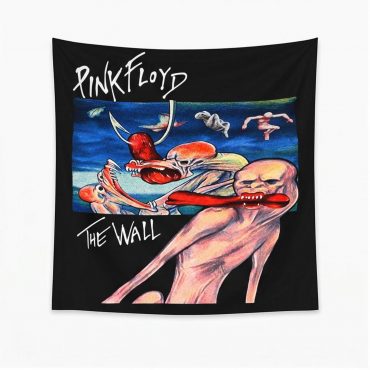
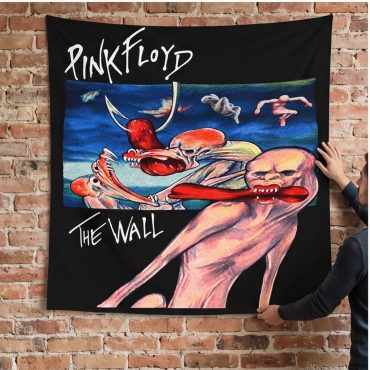
Part of what makes Pink Floyd artwork worth wearing is that every sleeve carries a chapter of this history. The blank white bricks of The Wall aren’t just a design; they are the album that cost the band a founding member. The two metal heads of The Division Bell are, among other things, the record where Rick Wright finally got his name back on the credits.
If you want the era where Wright’s playing is at its most exposed and most beautiful, Wish You Were Here is the one, the album Gilmour said would not have worked without him. Our Pink Floyd t-shirts and posters cover all three eras, and for anyone who knows this story, wearing one is a quiet nod to the man who kept showing up even after he was told to leave.
Frequently Asked Questions
Why was Richard Wright fired from Pink Floyd?
Richard Wright was fired from Pink Floyd in 1979 during the recording of The Wall. He had contributed very little material to the album while dealing with a divorce and, by his own later admission, undiagnosed depression. Roger Waters issued an ultimatum: Wright would leave, or Waters would refuse to release the album. Wright agreed to resign.
Did Richard Wright play on The Wall album?
Yes. Wright performed on The Wall and is credited on it; the firing happened during the sessions, and the album was completed and released in November 1979 with his keyboard work intact.
Was Richard Wright on The Final Cut?
No. The Final Cut (1983) is the only Pink Floyd studio album that Richard Wright does not appear on at all.
Did Richard Wright make money from The Wall tour?
He did, and he was the only one who did. Wright played the 1980-81 shows as a salaried sideman on a flat fee, while Waters, Gilmour and Mason personally covered the enormous production costs and took a loss on the tour.
When did Richard Wright rejoin Pink Floyd?
He returned as a paid player on A Momentary Lapse of Reason in 1987, after Roger Waters left the band, but contractual issues meant he wasn’t credited as a member. He was fully reinstated as a member of Pink Floyd for The Division Bell in 1994.
How did Richard Wright die?
Richard Wright died of cancer on 15 September 2008 in London, at the age of 65.
Conclusion: The Man Who Outlasted the Wall
There is a neat symmetry to how this ended. Roger Waters fired Richard Wright from Pink Floyd in 1979 because he had decided the band no longer needed him, and six years later, Waters was the one who walked away, convinced Pink Floyd could not exist without him. It could. Wright played on every Pink Floyd tour there ever was. He was on the last studio album. He was on the last stage the four of them ever shared.
The story of how Richard Wright was fired from Pink Floyd is usually told as a story about Roger Waters. It isn’t. It’s a story about the quietest man in the band, who took the worst of it and came back anyway. If that resonates with you, browse the OtherBrick Pink Floyd collection and pick the era that means the most to you.



