
News
Pink Floyd The Wall Characters and Their Dark Meanings
Pink Floyd The Wall characters give fear, anger, and isolation some of their most unforgettable shapes in rock cinema. In the animated sequences of the 1982 film, a schoolteacher becomes a nightmare, a mother’s embrace becomes confinement, and marching hammers turn obedience into something terrifying. Understanding these figures adds another layer to the music and to the artwork that fans continue to recognize decades later.
Table of Contents
The World Behind The Wall Animation
Based on Pink Floyd’s 1979 album, Pink Floyd, The Wall combines live action with animation to explore the life of Pink, a troubled rock musician retreating behind an emotional barrier. Alan Parker directed the film, Roger Waters wrote the screenplay, and Gerald Scarfe developed the distinctive visual world behind its animated imagery.
Scarfe’s distorted bodies and sudden transformations make private emotions visible. People who have shaped Pink’s life return as exaggerated figures, especially during The Trial, when his inner conflict becomes a grotesque courtroom spectacle.
These images belong to Pink’s subjective world. The Mother, Wife, and Teacher appear through memories, resentment, dependence, and fear. The following list explores six central figures and one collective symbol, with interpretations that connect their roles in the story to the images seen on OtherBrick’s canvas designs.
1. Pink and the Fragility Behind the Wall
Pink is the person around whom everything revolves. The loss of his father, humiliating school experiences, troubled relationships, and pressures of performance contribute to his withdrawal. Each experience becomes part of the emotional wall separating him from other people.
During The Trial, his animated form is strikingly helpless. Presented as a small rag doll, he is dwarfed by the figures surrounding him. The difference in scale makes the scene feel less like an ordinary hearing and more like a nightmare in which everyone else has the power to define him.
This is the key to understanding the other characters. Their exaggerated forms express the weight they carry in his mind. Pink has built a barrier to protect himself, yet behind it he becomes increasingly vulnerable to the memories and accusations he cannot escape.
2. The Teacher and the Cruelty of Authority
The Teacher, also known as the Schoolmaster, represents one of Pink’s earliest encounters with humiliating authority. His role connects the anger of Another Brick in the Wall, Part 2 with the accusations heard later in The Trial.
In the animated courtroom, the Schoolmaster appears as a grotesque puppet. That image complicates his authority. A man who demands control over children is himself presented as a figure being controlled. His cruelty can be read as part of a wider cycle in which humiliation passes from one person to another.
The target is an education built around fear and forced conformity. Pink’s individuality becomes something to discipline, and the Teacher’s exaggerated appearance gives that pressure a recognizable face. For fans drawn to the album’s confrontation with institutional power, this is one of its most immediately meaningful characters.
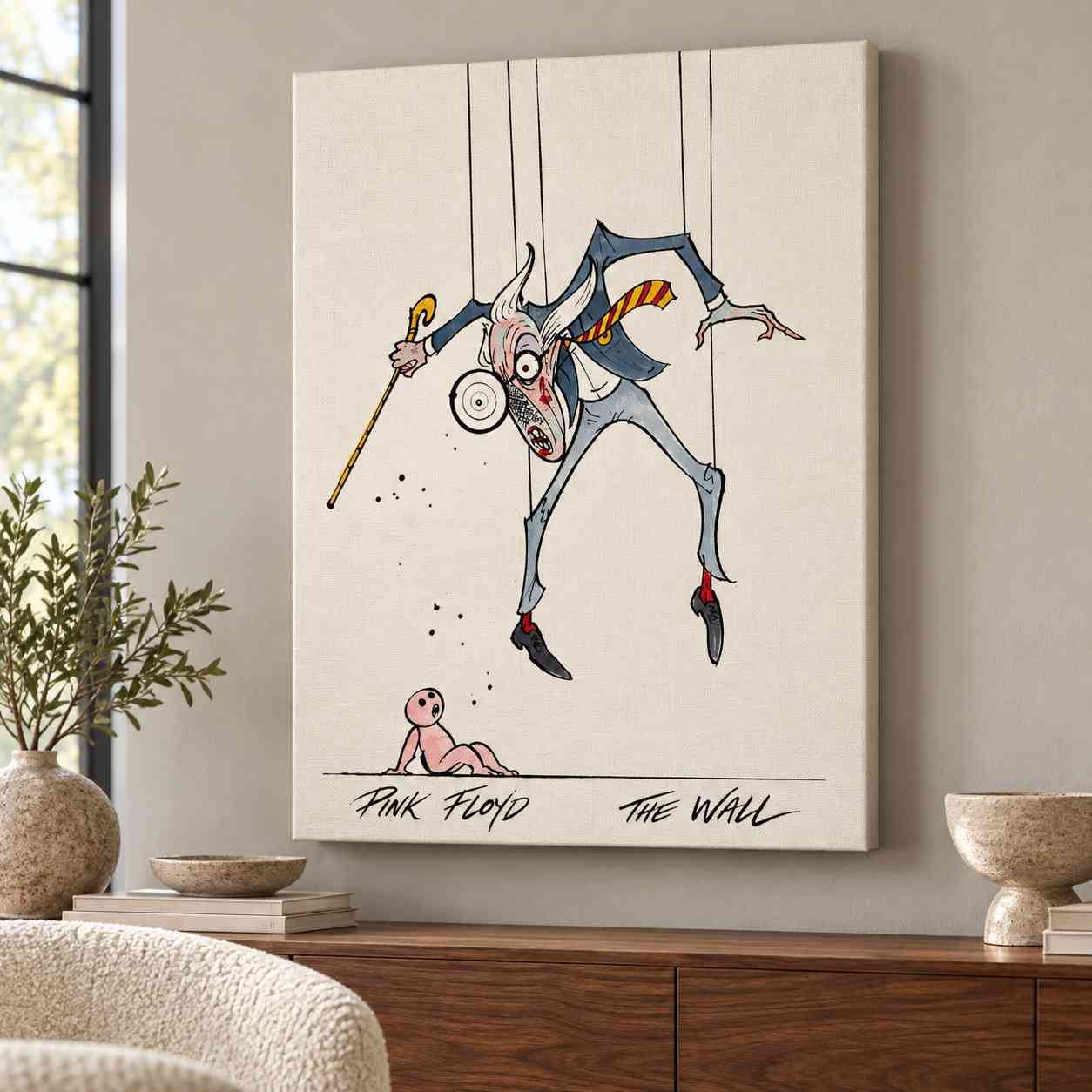
Explore the The Wall Teacher 1982 canvas for a closer look at this character’s distinctive design.
3. The Mother and the Weight of Protection
The Mother is unsettling because her influence begins with something familiar and sympathetic, the desire to keep a child safe. Within Pink’s story, however, protection becomes entangled with anxiety, dependence, and difficulty facing the outside world.
Her appearance in The Trial brings maternal concern into the courtroom. She wants to take Pink home, but returning to safety also suggests returning to the relationships and habits that have helped keep him enclosed. Comfort and confinement become difficult to separate.
One way to read her animated presence is as an enlarged version of the shelter Pink has always wanted. It promises security while leaving little room for independence. This tension gives the Mother her emotional force. She represents a bond that can feel loving and restrictive at the same time.
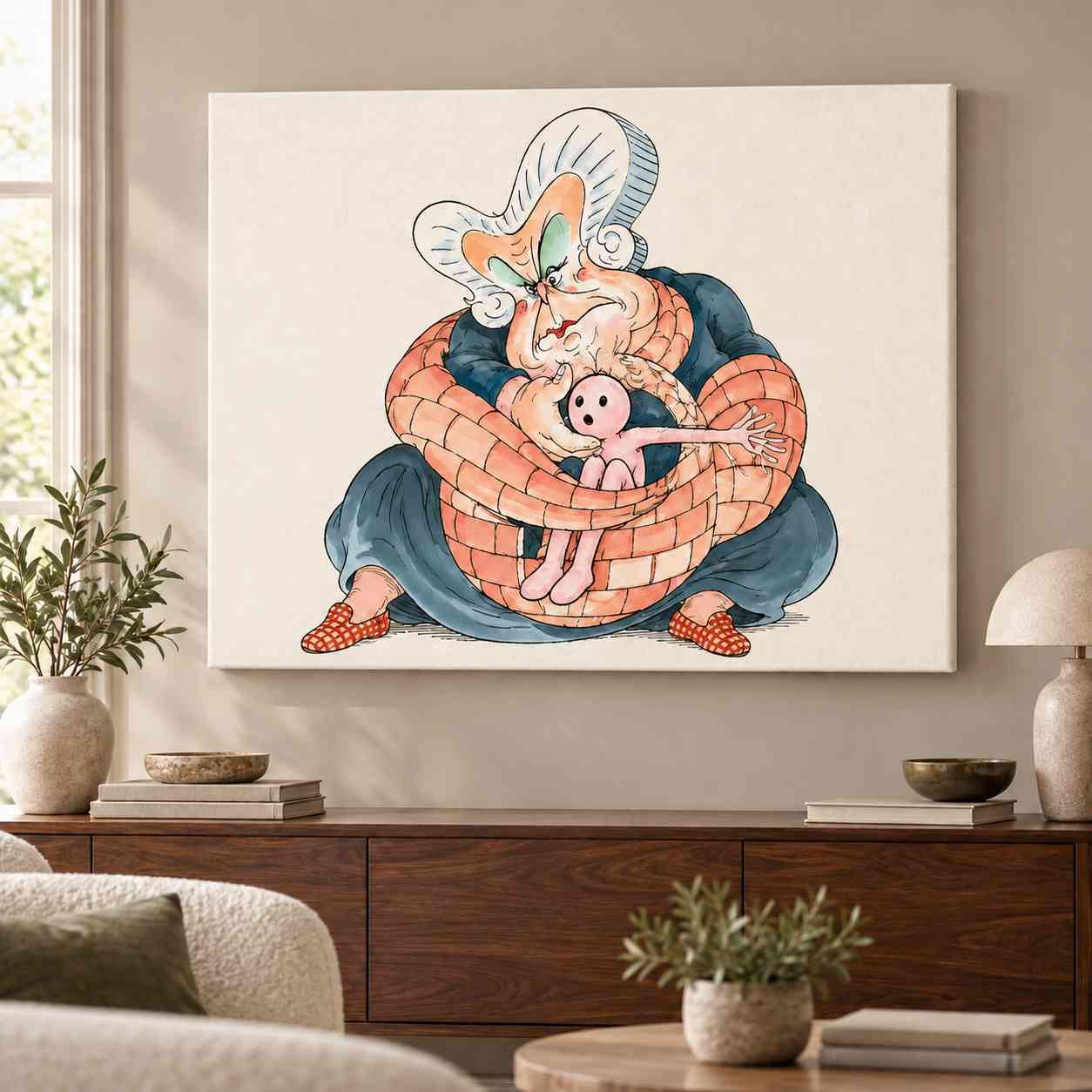
The The Wall Mother 1982 canvas offers a connection to the story’s more intimate emotional conflicts.
4. The Wife and the Breakdown of Intimacy
The Wife brings Pink’s adult relationships into the animated nightmare. Their marriage is shaped by distance and failed communication, and her appearance in The Trial gives anger and estrangement an aggressive visual form.
Scarfe’s threatening treatment of the character fits the emotional logic of the sequence. Someone who once represented closeness now appears capable of hurting him. Through Pink’s perspective, intimacy becomes tangled with fear, rejection, and resentment.
Her role deserves more attention than simply labeling her a villain. Pink’s withdrawal also damages their relationship. The wall that is supposed to prevent pain makes connection increasingly difficult, leaving both people trapped in a relationship they can no longer sustain.
Seen this way, the Wife represents the cost of emotional isolation. The more Pink protects himself from vulnerability, the harder it becomes to maintain the closeness he needs.
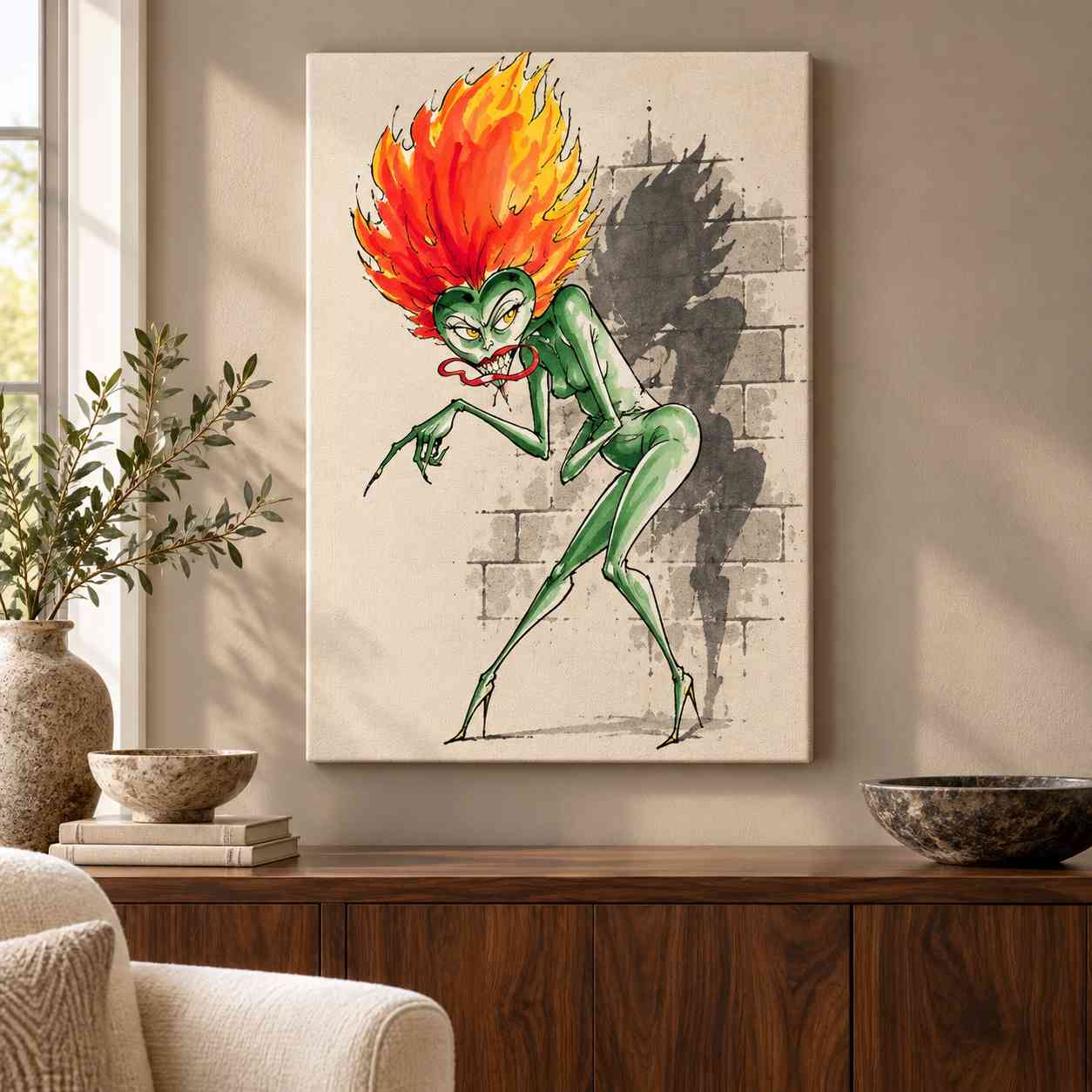
View the The Wall Wife 1982 canvas to explore this part of the film’s visual world.
5. The Prosecutor and the Accusation of Being Human
The Prosecutor gives Pink’s internal courtroom its formal voice. He introduces the case and helps turn the figures from Pink’s life into participants in a public examination of his emotions.
You Might Also Like












The absurdity lies in what is being prosecuted. Expressions of ordinary human feeling are treated as grounds for condemnation. In the psychological world Pink has constructed, vulnerability has become something shameful and dangerous.
The Prosecutor can therefore be understood as the voice that organizes self-accusation. Memories become evidence, relationships become testimony, and private pain becomes a case to be argued.
His role is distinct from the Judge’s. The Prosecutor presents the accusation, while the Judge delivers the verdict. Together they make the scene feel like a system already arranged against the small, defenseless figure at its center.
6. The Judge and the Collapse of Pink’s Defenses
The Judge is one of the film’s most grotesque creations. His exaggerated anatomy strips the courtroom of dignity and turns its highest authority into an obscene caricature. The image makes the power to condemn look ugly, intimidating, and absurd.
Yet the verdict creates the scene’s central contradiction. Pink’s wall must come down. The structure that has allowed him to withdraw from other people becomes the thing he can no longer keep.
This can be read as both punishment and the possibility of release. Being exposed is terrifying for someone who has organized his life around self-protection. At the same time, remaining sealed away offers no meaningful resolution.
The Judge’s importance comes from that uncomfortable turning point. The trial forces Pink toward the vulnerability he has spent the story trying to avoid, without making the outcome feel simple or reassuring.
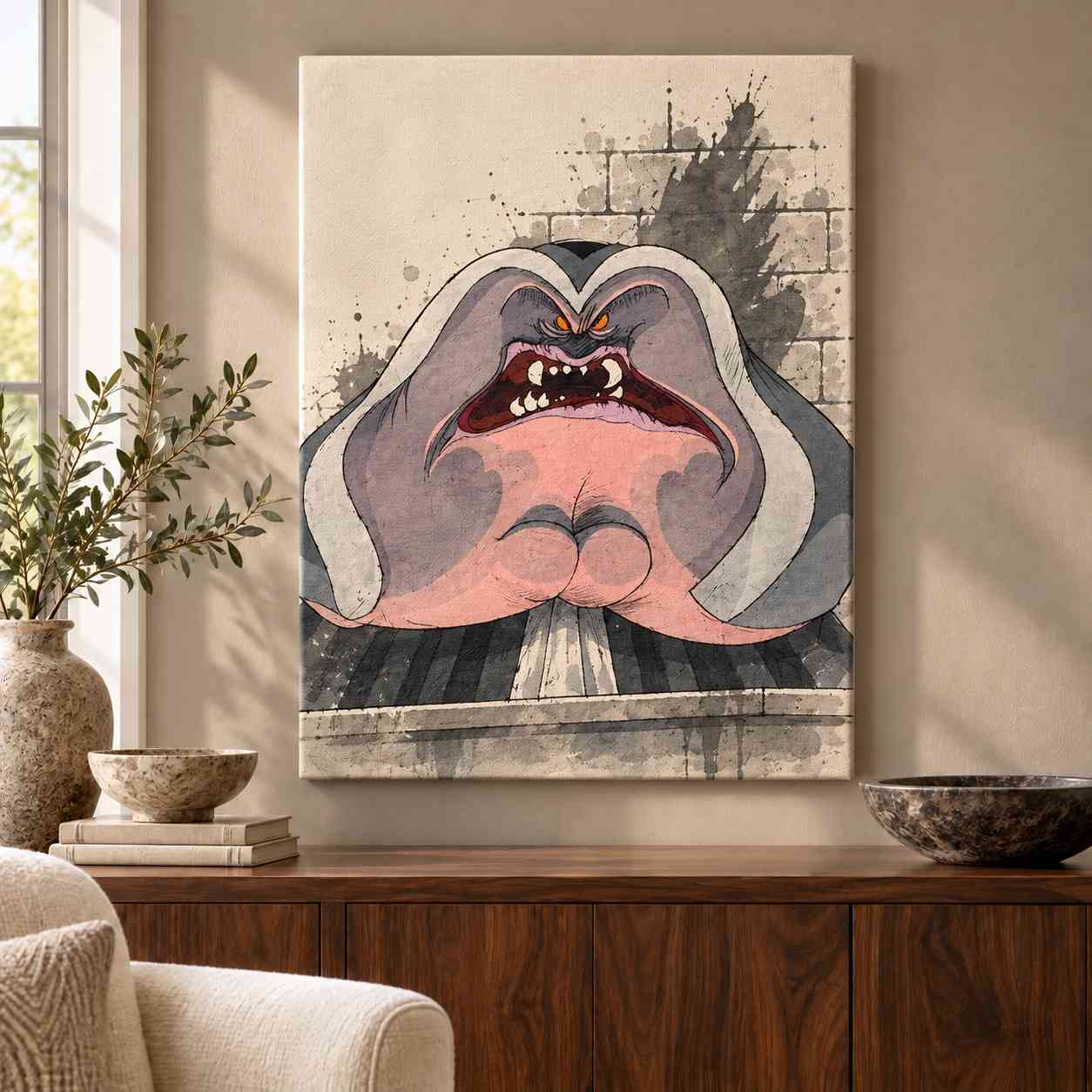
The The Wall Judge 1982 canvas brings this climactic figure into a standalone artwork.
7. The Marching Hammers and the Terror of Conformity
The marching hammers are a collective symbol rather than an individual character. Their repeated shapes and synchronized movement create an image of force without individuality, connecting directly with the fascist fantasy surrounding Pink’s later breakdown.
A hammer is an ordinary tool, but multiplied into an advancing formation, it becomes threatening. Repetition removes hesitation and difference. Every object follows the same movement, making obedience itself part of the horror.
Within the film, this imagery belongs to a critique of authoritarian power and collective violence. Its meaning depends on that context. The visual precision is disturbing because it shows how easily human complexity can disappear inside an organized, destructive identity.
Where the Teacher, Mother, and Wife connect to personal relationships, the hammers extend the story outward into politics and mass behavior. Pink’s private collapse becomes entangled with a much wider nightmare.
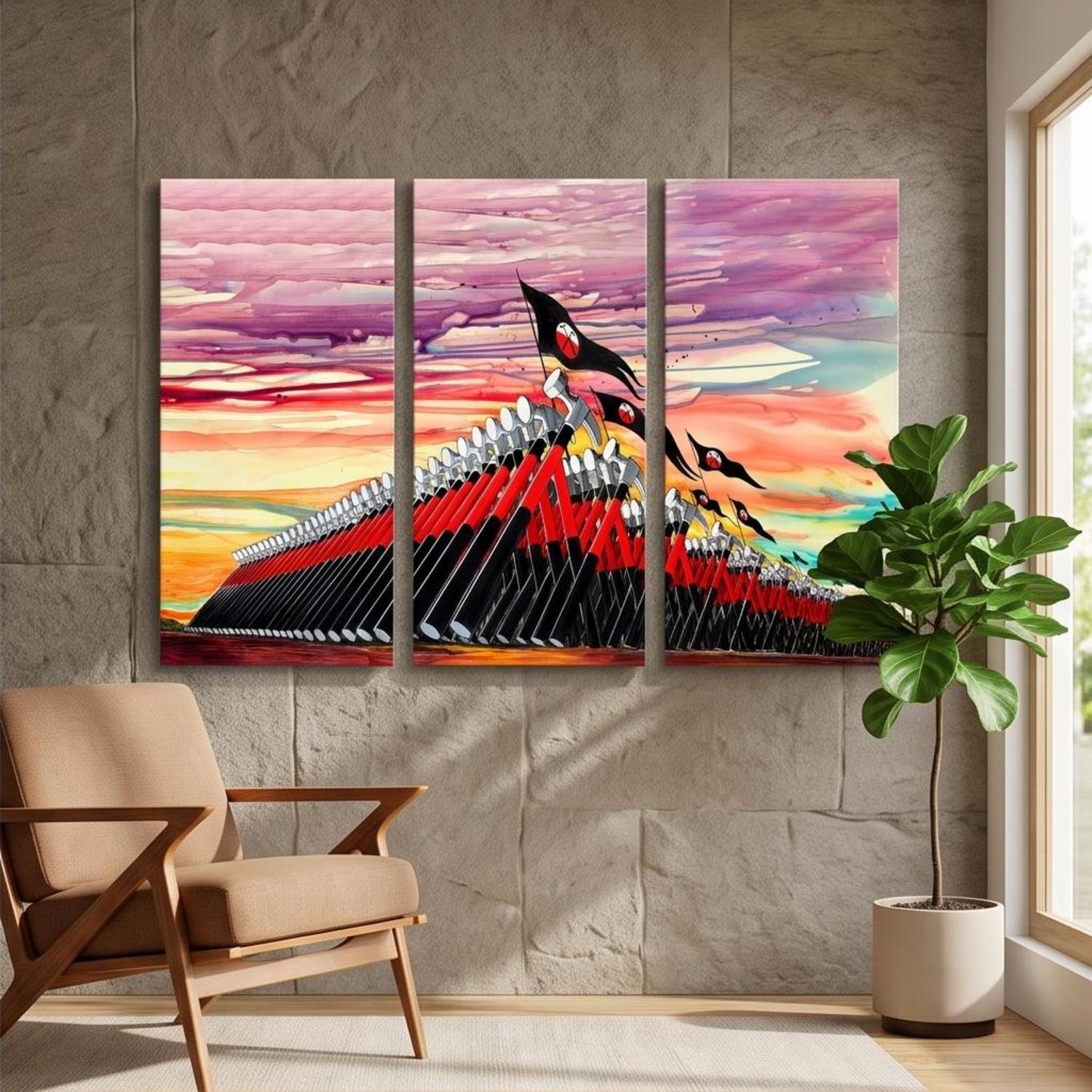
Explore the Marching Hammers Drawing Art canvas to see this symbol presented as wall art.
Questions About The Wall Animated Characters
Who created the animated characters in The Wall?
Gerald Scarfe developed the character designs and distinctive imagery associated with The Wall. The film’s animation was realized by an animation team working with his designs and direction, alongside Alan Parker’s live-action filmmaking and Roger Waters’ story.
Is The Wall from 1982 entirely animated?
No. The film combines live-action scenes with animated sequences. Animation gives visual form to experiences and emotions that move beyond realistic storytelling, including the surreal courtroom of The Trial.
Are the marching hammers characters?
They function primarily as a collective visual symbol. Their synchronized movement connects them with conformity, authoritarianism, and the destruction of individuality within the film’s fascist imagery.
Why do the characters look so disturbing?
Their distorted forms suit a story told through fear, memory, and emotional crisis. Exaggeration allows a familiar person or object to take on the overwhelming presence it has within Pink’s inner world.
Bring a Piece of The Wall’s Visual Story Home
Choosing artwork from The Wall often begins with the part of the story that stays with you. The Teacher recalls the anger surrounding humiliation and control. The Mother and Wife connect with more personal tensions. The Judge marks the confrontation with Pink’s defenses, while the marching hammers carry the film’s warning about collective power.
Displayed together, these images also reveal how personal and public forms of control run through the same story. Each design offers a different entry point into a visual language that remains inseparable from the music.
Browse OtherBrick’s Pink Floyd canvas collection and find the artwork that reflects your connection to Pink Floyd The Wall characters.



