
News
Pink Floyd Hull 1967 The Mick Ronson Connection
The Pink Floyd Hull 1967 gig advert promises psychedelic lighting effects, a late finish, and a bill worth a second look. Among the supporting acts were The Rats, whose guitarist Mick Ronson would later help shape David Bowie’s Ziggy Stardust era. This small advertisement captures a fascinating connection between two chapters of British rock.
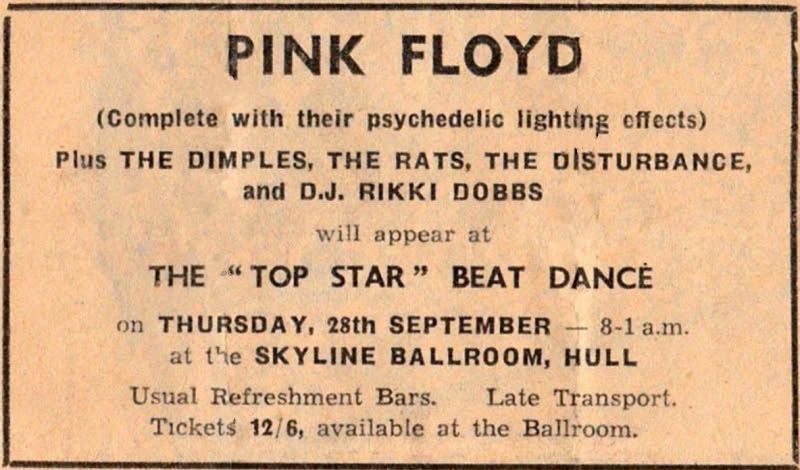
September 1967 appearance at Hull’s Skyline Ballroom, with The Rats among the supporting acts.
Table of Contents
Inside the Pink Floyd Hull 1967 Gig Advert
Pink Floyd’s name dominates the advertisement, followed by a promise: “Complete with their psychedelic lighting effects.”
Below it comes the supporting lineup: The Dimples, The Rats, The Disturbance, and DJ Rikki Dobbs. The event was advertised as the “Top Star” Beat Dance at the Skyline Ballroom in Hull on Thursday, 28 September 1967.
The practical details are part of its charm. The evening ran from 8 p.m. to 1 a.m., with refreshment bars and late transport advertised. That five-hour window covered the event, rather than a five-hour Pink Floyd performance.
Tickets cost 12/6, twelve shillings and sixpence in Britain’s pre-decimal currency, and were available at the ballroom.
It reads like an invitation to an ordinary Thursday night out. Looking back, the names on the bill give it a very different significance.
Pink Floyd in September 1967: The Syd Barrett Era
To place this concert in context, picture Pink Floyd as they were in 1967: Syd Barrett, Roger Waters, Richard Wright, and Nick Mason, with their debut album newly released.
The Piper at the Gates of Dawn had arrived in the UK that August. Its mixture of unusual songs, vivid imagery, and instrumental exploration captured a band developing a distinctive musical language. For readers discovering this period, the story of Pink Floyd’s first album provides a useful starting point.
Pink Floyd in 1967, during the Syd Barrett era. Photograph: Dezo Hoffmann/REX Features. This is a period portrait, not a photograph of the Hull concert.
The Hull advertisement also makes clear that the visual experience was part of the attraction. Lighting effects receive their own line immediately beneath the band’s name.
That detail helps bring the period into focus. Audiences were being offered music and a psychedelic spectacle together, years before the enormous productions associated with Pink Floyd’s later tours.
The album establishes the musical context, though it cannot tell us exactly which songs the band played in Hull that night.
The Rats and Mick Ronson: Before David Bowie
For anyone scanning the advertisement today, The Rats are the name most likely to prompt a second look.
The Hull band included Mick Ronson, then still several years away from the international recognition he would gain alongside David Bowie. His name does not appear separately in the advertisement. He was there as a member of one of the supporting groups.
That is what makes the connection so appealing. A guitarist remembered for one of rock’s most recognisable partnerships appears here within the local music scene that preceded it.
The advert preserves a moment when those later identities had yet to take shape. Pink Floyd were establishing themselves during their first album’s release year, while Ronson was building his experience with The Rats.
There is no need to turn the evening into a legendary musical summit. The shared billing is interesting on its own: two different paths through British rock briefly appearing on the same printed page.
From Hull to the Spiders From Mars and Mott the Hoople
Ronson’s later career gives The Rats’ appearance on the bill its extra resonance.
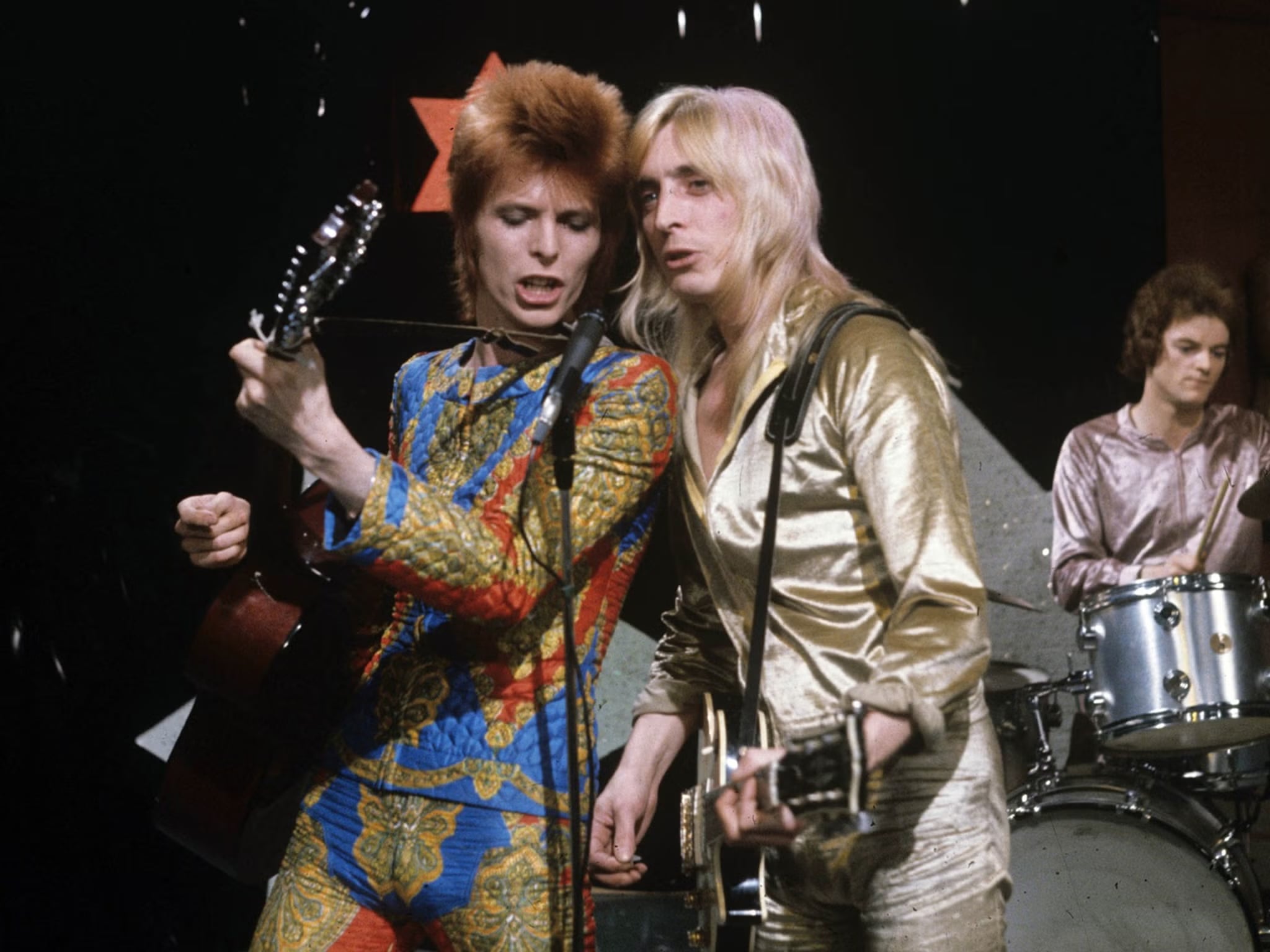
By 1970, he was working with David Bowie. His guitar became central to the music that followed, including The Man Who Sold the World and the records that carried Bowie into his Ziggy Stardust period.
As a member of the Spiders From Mars, Ronson helped give that music its force and character. His playing and stage presence became an essential part of the partnership fans still associate with Bowie’s early-1970s performances.
You Might Also Like






In 1974, Ronson briefly joined Mott the Hoople, beginning another important chapter in his association with singer Ian Hunter.
Those developments all lay ahead when The Rats appeared beneath Pink Floyd’s name in the Hull advertisement. For a modern reader, knowing what followed changes the way that small supporting-act credit looks.
What This 1967 Advert Can, and Cannot, Tell Us
Historical advertisements are valuable because they preserve specific details: names, dates, venues, prices, and the language promoters used to attract an audience.
Here, the image identifies the advertised lineup and the Skyline Ballroom setting. Pink Floyd concert archives also list a Hull appearance on 28 September 1967, using the venue name Skyline Club.
Other details remain unverified. The advertisement does not establish the setlist, describe the performances, or record what happened backstage. It gives us no basis for claiming that Ronson joined Pink Floyd during their set.
David Bowie is not listed on the bill, either. His connection to the story comes through Ronson’s subsequent career.
Keeping those distinctions clear lets the document retain its real value. It is a specific glimpse of the live music circuit in 1967, with enough detail to be compelling without adding imagined encounters.
Why Early Pink Floyd Concert Artwork Still Resonates
There is something absorbing about concert artwork created before anyone knew how the story would unfold.
The Hull advertisement was designed to sell tickets for one evening. Its plain lettering and practical information now carry a different kind of appeal: they bring a distant period closer through small, readable details.
It also offers an interesting companion to the artwork of The Piper at the Gates of Dawn. An album sleeve presents a carefully constructed image of a band; a local gig advertisement shows how that band was introduced to an audience on a particular night.
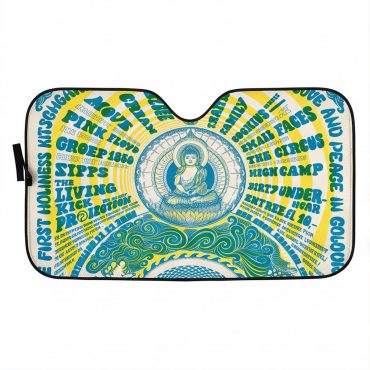
For fans who enjoy displaying this history, OtherBrick’s 14-Hour Technicolor Dream concert poster connects with another Pink Floyd event from the same year. It represents the London event, rather than the Hull show discussed here.
Our guide to decorating with Pink Floyd posters offers ideas for bringing artwork from different periods into a listening space.
Frequently Asked Questions
When did Pink Floyd play the Skyline Ballroom in Hull?
Pink Floyd’s Hull appearance is dated 28 September 1967. The supplied advertisement names the venue as the Skyline Ballroom, while concert listings also use Skyline Club.
Which supporting acts were listed in the advert?
The advertisement lists The Dimples, The Rats, and The Disturbance beneath Pink Floyd. DJ Rikki Dobbs is also named as part of the evening’s entertainment.
What connects Mick Ronson to this Pink Floyd gig?
Ronson was a guitarist in The Rats, one of the advertised supporting bands. He later became famous for his work with David Bowie and the Spiders From Mars before briefly joining Mott the Hoople.
Did David Bowie perform that night?
Bowie is not named in the advertisement, and the sources checked for this article do not establish that he performed. The Bowie connection concerns Ronson’s later career.
Is there a confirmed setlist for the Hull show?
A reliable setlist was not established during research for this article. Songs from Pink Floyd’s 1967 recordings should therefore not be presented as confirmed performances from this particular evening.
A Small Advert with a Lasting Place in Rock History
The appeal of this advertisement lies in how much history fits into so little space. There is Pink Floyd in their debut-album year, a promise of psychedelic lighting, and a supporting band whose guitarist would help define another celebrated chapter of British music.
There are also the ordinary details: tickets at the ballroom, refreshments, and transport home. Together, they remind us that the concerts we now study as rock history were once simply nights people decided to attend.
To bring a little of that early era into your listening room, explore OtherBrick’s 14-Hour Technicolor Dream poster, commemorating a separate 1967 event.
One modest advert is enough to make Pink Floyd Hull 1967 a story worth revisiting.



