
News
Roger Waters Amused to Death: A Warning for Today
Table of Contents
In 1992, Roger Waters Was Watching the World Through a Screen
When Roger Waters discussed the making of Amused to Death in an interview later, he did not describe songwriting as an artificial exercise. He said that events confronted him, touched his emotions and eventually found their way into his songs.
Waters lived his life, read newspapers, spent time with his children and waited until something compelled him to return to the studio. Then came the remark that seems to unlock the entire album: the record largely reflected what he had recently seen on television.

That statement placed Amused to Death firmly inside its historical moment. The Gulf War had been presented to millions of viewers through carefully selected images, military briefings and round-the-clock television coverage. Political messages, advertising and entertainment occupied the same medium, often separated by no more than a commercial break.
Waters was not merely complaining about people watching too much television. He was asking what happened when the screen became our principal way of experiencing the world.
Television as a Two-Edged Sword
For Waters, television was never a simple villain. It could turn viewers into passive consumers, but it could also reveal contradictions that governments and corporations would rather conceal.
During an MTV Europe interview in October 1992, he called television a two-edged sword and described it as a medium powerful enough to either harm humanity or help save it. The danger did not come from the screen alone. It came from who controlled it, why they used it and whether the viewer continued to think critically.
This tension runs throughout Amused to Death. Television gives people access to distant events, yet it can also reduce those events to disposable images. It can expose propaganda while delivering propaganda of its own. It can make suffering visible while teaching audiences to consume that suffering as entertainment.
What Does Amused to Death Mean?
The title of the album was influenced by media critic Neil Postman’s 1985 book Amusing Ourselves to Death. Postman argued that television was transforming serious public discourse into entertainment, changing not only how information was presented but also what kind of information society was willing to receive.
In a contemporary Los Angeles Times interview, Waters described an image that had formed in his mind: alien visitors arriving after humanity’s destruction and finding our skeletons seated around television sets. The aliens conclude that the species had, quite literally, amused itself to death.
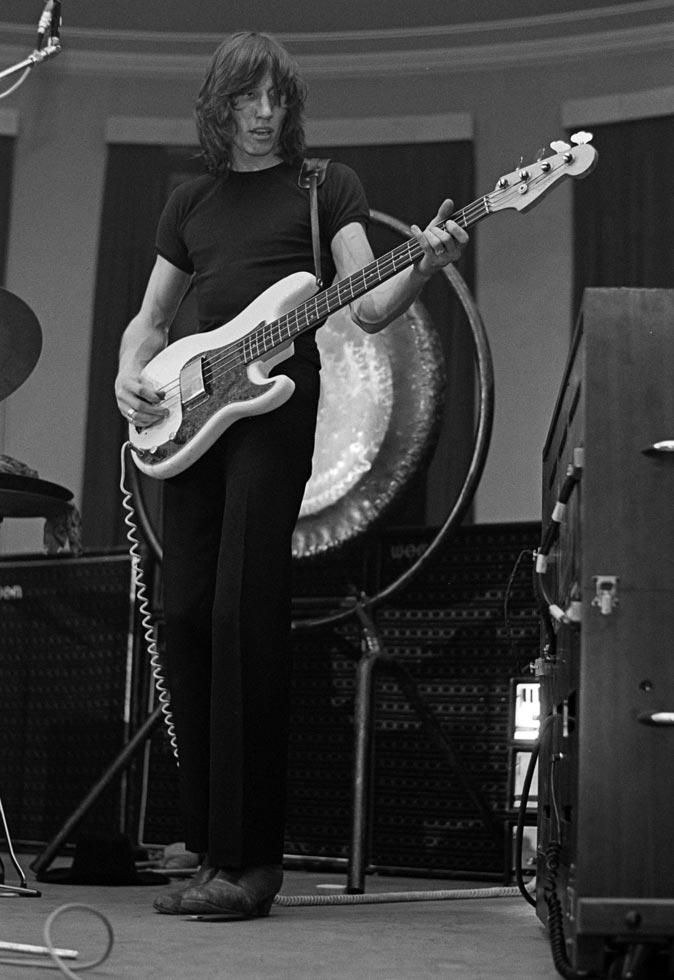
Waters transformed that bleak image into a concept album about television, commerce, religion, warfare and emotional detachment. Across its songs, people are surrounded by information yet remain unable, or unwilling, to recognize their shared humanity.
The original album artwork makes the argument visually. A chimpanzee sits in front of a television, transfixed by the glowing screen. The image recalls the opening movement of Stanley Kubrick’s 2001: A Space Odyssey, but the evolutionary journey appears to have stalled. Humanity has acquired extraordinary technology without necessarily gaining the wisdom to use it.
The Viewer Is the Monkey
The monkey is not simply a character on the album cover. It represents the listener, the consumer and the species as a whole.
Waters does not allow us to imagine that only other people are manipulated by television. We are the ones sitting in front of the screen. We watch wars, political speeches, advertisements, religious broadcasts and game shows arrive in an uninterrupted flow. Everything is presented through the same frame, so the differences between tragedy and entertainment begin to collapse.
The screen shows us more of the world than previous generations could have imagined. But seeing is not necessarily the same as understanding, and understanding is not the same as acting.
When War Became Television
One of the strongest forces behind Amused to Death was Waters’ reaction to television coverage of the Gulf War. The conflict reached audiences through aerial footage, computerized maps, official briefings and images of precision weapons. War could be watched from the safety of a living room, its human consequences often hidden behind the language of technology and strategy.
In the 1992 Italian interview, Waters argued that the images on television sometimes revealed a different truth from the official explanation. Viewers could hear the language of liberation while also recognizing political performance, mythology and self-interest in the presentation.
The album repeatedly examines this distance between the people who experience violence and those who watch it. Warfare becomes a production. Political leaders become performers. The audience is encouraged to choose a side, admire the machinery and wait for the next update.
“The Bravery of Being Out of Range”
“The Bravery of Being Out of Range” attacks the moral comfort of technologically distant warfare. Its title is deliberately bitter: it is easy to appear brave when the person pulling the trigger is far removed from the people who will be killed.
That distance also describes the television viewer. We may witness destruction, but we remain physically safe. The suffering exists inside a rectangle in the room and can disappear when the channel changes or the television is switched off.
Waters’ target is therefore larger than any single military leader. He is examining a system in which violence becomes abstract to those with the power to order it, and to the audience invited to watch it.
“Perfect Sense” and War as a Sporting Event
In “Perfect Sense,” military conflict is narrated like a sporting contest. The language of live commentary transforms destruction into competition, complete with spectators, excitement and a final score.
The idea is absurd, but its presentation is disturbingly familiar. Sports broadcasts and televised warfare both rely on aerial views, statistics, replayed images, expert commentary and simplified opposing sides. By placing them together, Waters exposes how easily the grammar of entertainment can be used to package violence.
Once war becomes a spectacle, the audience no longer has to confront it as a human catastrophe. It can be consumed as another program.
“Watching TV”: When Human Suffering Becomes an Image
If parts of Amused to Death feel satirical or confrontational, “Watching TV” gives the album its emotional center. The song was inspired by television coverage connected with the 1989 Tiananmen Square protests and focuses on a young Chinese woman whose death reaches the outside world through the screen.
The person at the heart of the song becomes both an individual and a televised symbol. Viewers far away may feel grief for her, yet they know her only through an image selected, transmitted and repeated by the media.
Waters understood that contradiction. Television could bring a distant tragedy into someone’s home and produce genuine empathy. At the same time, it could place that tragedy inside the endless flow of programming, where one human death might be followed by an advertisement, a celebrity appearance or another piece of breaking news.
You Might Also Like


In the Italian interview, Waters recalled that several people had cried while listening to “Watching TV.” He considered that emotional response a form of success at least as meaningful as selling millions of records. It demonstrated that a song could recover some of the humanity that the media spectacle threatened to erase.
Religion, Advertising and the Question of “What God Wants”
Television is only the delivery system in Amused to Death. Waters’ deeper concern is what passes through it: political certainty, commercial desire, religious authority and the promise that consumption will provide meaning.
“What God Wants” brings these forces together. The song moves through a catalogue of demands and possessions, showing how easily divine authority can be invoked to justify human appetite. Religion becomes a slogan, war becomes righteous and the marketplace offers another product before the viewer has time to question any of it.
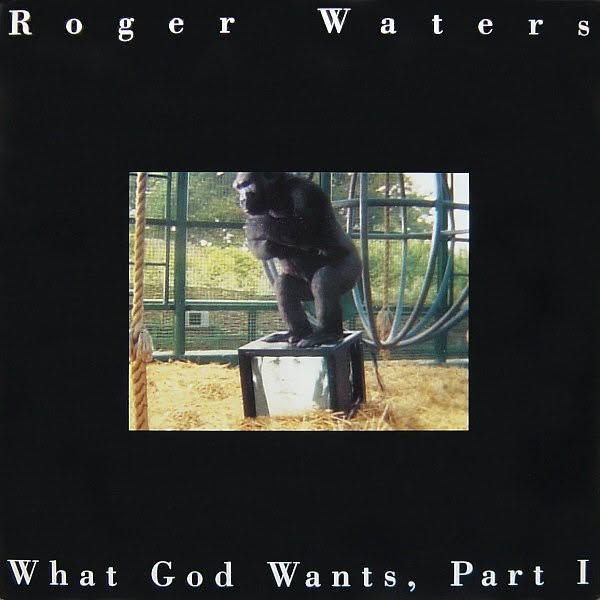
Jeff Beck’s expressive guitar gives the song a second voice, responding to Waters’ words with bent notes, sudden attacks and an almost human cry. For the single’s history, musical personnel, video and three-part structure, read the story behind “What God Wants”.
Why Roger Waters’ 1992 Warning Still Feels Current
The technology surrounding us has changed dramatically since 1992. Television is no longer the only screen through which we encounter the world. News, political arguments, war footage, advertising and entertainment now arrive through phones, social platforms, streaming services and algorithmic feeds.
It would be an exaggeration to say that Waters predicted every part of modern digital culture. What he recognized was the underlying pattern: when information must compete for attention, even the most serious events can be reshaped into spectacle.
A report of human suffering can appear between a joke and a product advertisement. A political speech can be reduced to a short clip designed for maximum reaction. Graphic images can travel around the world in seconds, but their speed does not guarantee context or understanding.
This is why Amused to Death has aged so differently from many albums built around contemporary technology. Its subject was never merely the television set. Its subject was our willingness to surrender attention, judgment and empathy to whatever appeared on the screen.
The Medium Changed, but the Dilemma Remains
In 1992, viewers usually watched the same broadcast for minutes or hours. Today, a person can move through hundreds of disconnected images in the same period. The scale has changed, but Waters’ central question remains intact: does greater access to information make us more aware, or does the endless supply make every event easier to forget?
The danger is not ignorance in the traditional sense. Modern viewers may encounter more news than any previous generation. The danger is knowing a little about everything while feeling responsible for nothing.
Amused to Death Is Not Entirely Hopeless
Waters is often described as cynical, but his argument contains a stubborn form of hope. If television can manipulate, it can also expose. If viewers can be distracted, they can also recognize the distraction. The screen may carry a lie, but details within the image can allow an attentive person to see through it.
That distinction matters. Amused to Death does not ask listeners to reject every medium or retreat from the world. It asks them to remain awake, to look beyond the performance, examine who benefits from the message and remember the human beings hidden behind the spectacle.
The Sound Behind the Warning
Amused to Death would not have endured on ideas alone. Waters and co-producer Patrick Leonard built a detailed, cinematic recording in which songs, voices, sound effects and broadcast fragments flow into one another.
Jeff Beck’s guitar is one of the album’s defining musical elements. Rather than simply decorating the arrangements, his playing often functions like another character: wounded, sarcastic, volatile and sometimes unexpectedly tender. Other contributors help give the record the scale of a full dramatic production rather than a conventional collection of solo songs.
The album rewards uninterrupted listening. Voices seem to enter from distant rooms, television fragments interrupt the music and recurring ideas connect one song to the next. The listener is placed inside the same media environment the lyrics are criticizing.
This combination of music, narrative and social commentary belongs to a tradition Waters had developed during his years with Pink Floyd. Readers interested in that wider creative arc can explore the hidden meaning of Pink Floyd’s The Wall or revisit a selection of Roger Waters’ most famous songs.
Carrying the Art and Ideas Beyond the Record
For many listeners, Pink Floyd and Roger Waters imagery represents more than nostalgia. Prisms, walls, marching hammers and surreal scenes have become visual shorthand for ideas about conformity, authority, isolation and resistance.
Wearing or displaying that imagery can be a quiet way for fans to recognize one another. It recalls albums that were designed not only to be heard, but also to be questioned, discussed and revisited decades later.
If those ideas remain part of your own musical world, explore OtherBrick’s collection of Pink Floyd T-shirts or bring classic album imagery into your listening space with a Pink Floyd poster.
Frequently Asked Questions
When was Roger Waters’ Amused to Death released?
Amused to Death was released on September 7, 1992. It was Roger Waters’ third solo studio album, following The Pros and Cons of Hitch Hiking and Radio K.A.O.S.
What inspired the title Amused to Death?
The title was influenced by Neil Postman’s book Amusing Ourselves to Death. Waters expanded its critique of entertainment-driven public discourse into a concept about humanity watching television while becoming detached from war, politics and human suffering.
Is Amused to Death a Pink Floyd album?
No. Amused to Death is a Roger Waters solo album. However, its interconnected songs, recurring sound effects and large philosophical themes make it especially appealing to fans of Waters-led Pink Floyd works such as Animals and The Wall.
What is the main message of Amused to Death?
The album argues that television and mass media can inform and connect people, but they can also transform politics, warfare, religion and suffering into entertainment. Its message ultimately depends on whether viewers remain critical or become passive consumers.
Who played guitar on Amused to Death?
Jeff Beck was the album’s most prominent lead guitarist and made a major contribution to its distinctive sound. Andy Fairweather Low, Geoff Whitehorn, Tim Pierce, Steve Lukather and B.J. Cole were among the other guitarists credited across the record.
Are We Still Amusing Ourselves to Death?
Thirty-four years later, the old interview matters because Waters did not present television as an enemy that could simply be switched off. He described it as a test of our ability, both individually and collectively, to receive new information without surrendering our judgment.
The screens have multiplied since 1992. The images move faster, the boundaries between news and entertainment have weakened, and our attention has become more valuable to those competing to capture it. Yet the choice identified by Waters remains ours: we can watch passively, or we can look closely enough to recognize the performance.
Has the album become more relevant with time, or have we simply grown more accustomed to the world it described? Revisit the record, explore OtherBrick’s Pink Floyd collection, and decide whether Roger Waters’ Amused to Death still sounds like a warning meant for today.



