
News
Artemis II, Lunar Silence, and Pink Floyd Dark Side Of The Moon
Some moments in history feel like they were meant to happen a certain way. Artemis II was one of them. A mission to circle the Moon somehow ended up echoing something far more familiar to music lovers, especially fans of Pink Floyd. Because as the spacecraft slipped into silence behind the Moon, the timing aligned almost perfectly with The Dark Side of the Moon, turning a technical blackout into a strangely beautiful, shared experience. Not planned, not scripted… but somehow, it felt exactly right.
Table of Contents
Part 1: Artemis II – Not Just Another Mission, But a Turning Point
In April 2026, NASA made history again with Artemis II (April 1-11, 2026), and somehow, it did not feel distant or abstract the way space missions sometimes do. This one felt close. Human. Real. It was the first crewed mission to travel beyond low Earth orbit since Apollo 17 in 1972, which already sounds incredible when you say it out loud. More than 50 years later, humans were finally going back out there again.

Technically, Artemis II was the second flight of the Space Launch System (SLS) and the first crewed mission of the Orion spacecraft, named Integrity by its crew. But beyond the technical milestones, what made people connect with it was the crew itself: Reid Wiseman, Victor Glover, Christina Koch, and Jeremy Hansen. A team of four, representing not just skill and experience, but also a more inclusive and modern face of exploration. You could feel that this was not just about reaching the Moon again, it was about redefining what that journey means.
And the world noticed. Social media, news outlets, forums, everywhere, people were talking about it. There was excitement, yes, but also something softer, more emotional. A kind of shared pride. That is where the phrase “Moon joy” started appearing. Not as a marketing slogan, but as a genuine reaction. Because watching humans return to deep space after so long… it just hits differently.
Part 2: The Dark Side of the Moon, When a Coincidence Becomes Something More
Now here is where things get unexpectedly beautiful, especially if you are a Pink Floyd fan. During the mission, as Orion traveled behind the Moon, it entered what we call the far side, completely blocking communication with Earth. For about 40 to 50 minutes, there was silence. No signals. No updates. Just a spacecraft moving through darkness, unseen.
And then someone noticed something that feels almost unreal in its simplicity.
That window of silence… is nearly the same length as The Dark Side of the Moon (~42 minutes 49 seconds) by Pink Floyd.
Honestly, what are the odds?

At first, it sounds like a fun coincidence. But the more you think about it, the more it starts to feel meaningful. The Dark Side of the Moon has always been about time, pressure, isolation, the human mind, and our place in something much larger than ourselves. And here we are, decades later, watching a real spacecraft disappear into the literal dark side of the Moon… for almost the exact same duration.
Of course, people reacted. Reddit threads, fan forums, and comment sections lit up. The idea spread quickly: start the album the moment Orion loses contact. Just press play, sit back, and imagine the journey.
And somehow, that simple idea turned into something genuinely special.
You can almost map the experience. The heartbeat of Speak to Me as the signal fades. The calm of Breathe as the spacecraft drifts further away. The tension of Time, reminding you how fragile and limited everything is. And then Eclipse… closing everything out just as Orion emerges from behind the Moon, reconnecting with Earth.
It is not forced. It just fits. Perfectly.
A Cultural Moment Nobody Planned, But Everyone Felt

What really makes this story stand out is what happened after. People did not just talk about it, they experienced it together. Fans of Pink Floyd revisited the album, of course, but what is even more interesting is how many non-fans got curious. Streams increased, discussions grew, and suddenly The Dark Side of the Moon was being rediscovered by a whole new audience.
You Might Also Like





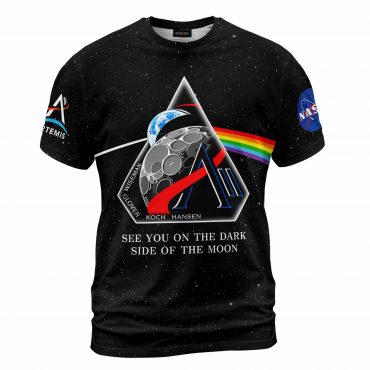



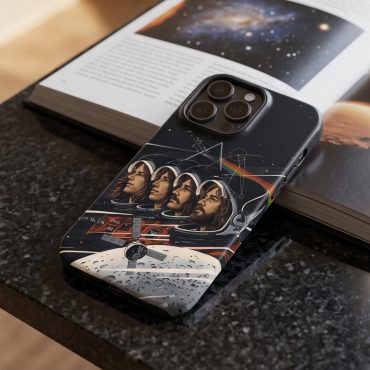



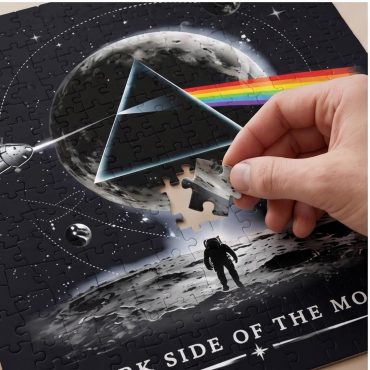

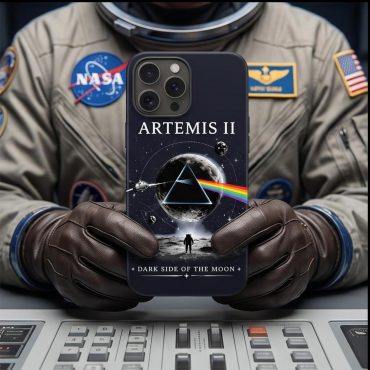
And the tone of those discussions? Surprisingly positive. Not argumentative, not divided, just people sharing how it felt. Some called it calming. Some said it gave them chills. Others simply said, “This is kind of perfect.” And honestly, it is hard to disagree.
As someone who has loved Pink Floyd for a long time, it is hard not to feel a bit emotional about it. Not in an over-the-top way, just a quiet kind of happiness. Like seeing something you care about still resonate, still find meaning, even in completely new contexts. It is almost like the music was waiting for a moment like this.
And maybe that is why this hit so many people. Because it was not just about space, and it was not just about music. It was about connection.
A Shared Silence, A Shared Experience
Think about it for a second. Somewhere beyond the Moon, four astronauts were traveling through complete radio silence. And back on Earth, thousands, maybe millions, of people were sitting in their own spaces, listening to the same album, imagining that exact moment.
Different countries. Different time zones. Different lives.
But for about 40 to 50 minutes… everyone was kind of in sync.
That is rare. That is really rare.
It is easy to get caught up in the technical side of missions like Artemis II, the engineering, the data, the milestones. But moments like this remind us why it matters on a human level. Because sometimes, without planning it, science creates space for culture. And culture, in turn, helps us feel what science alone cannot fully express.

And maybe that is the most beautiful part of all this.
A spacecraft disappears behind the Moon.
An album written in 1973 starts playing across the world.
And somehow, it all lines up.
If you were there, if you pressed play at the right moment, you probably felt it too – that quiet sense of awe, that strange calm, that feeling of being connected to something bigger than yourself.
Not just watching history. But experiencing it.
I’ll see you on the dark side of the moon.



