
News
Pink Floyd Hollywood Bowl 1972 Before Dark Side’s Release
Pink Floyd Hollywood Bowl 1972 offers a glimpse of The Dark Side of the Moon before the world knew it by heart. On September 22, the Los Angeles audience heard a pre-release version of the work at a concert with fireworks and a visual record that survives in fragments of amateur film.
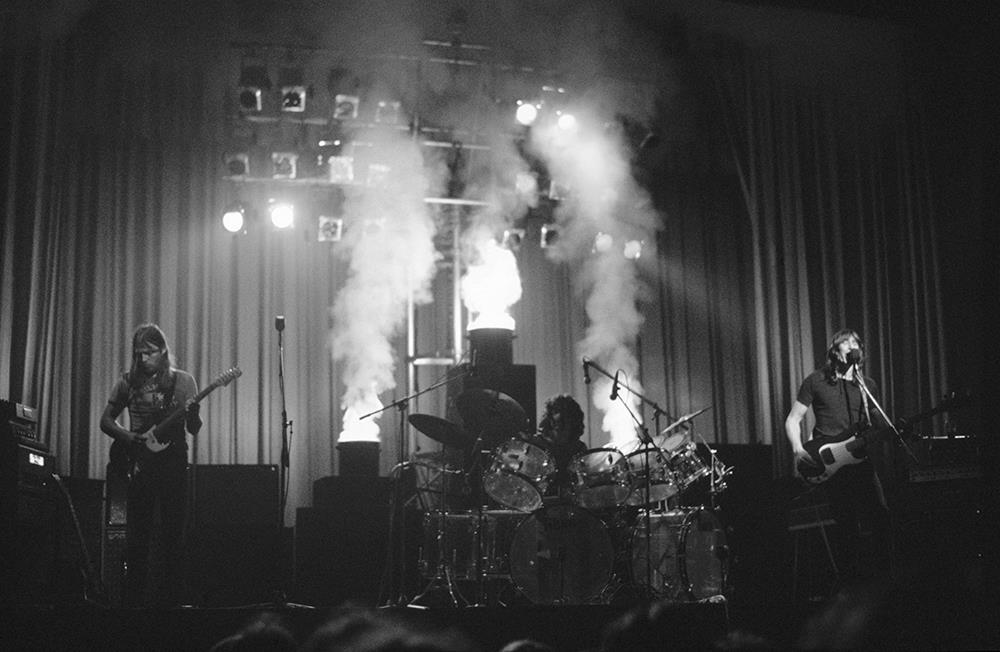
Table of Contents
September 1972: Taking Dark Side Across North America
By September, Pink Floyd had spent months performing music that had yet to reach record shops. The band’s official timeline dates the start of its autumn American and Canadian tour to September 8 in Austin, Texas. Hollywood Bowl came two weeks into that run.
A few dates place the Los Angeles concert in context. The Brain Damage concert archive, compiled in conjunction with historian Glenn Povey’s reference work, lists the following stops:
- September 8: Municipal Auditorium, Austin.
- September 17: Big Surf, Tempe.
- September 19: University of Denver Arena, Denver.
- September 22: Hollywood Bowl, Los Angeles.
- September 23–24: Winterland Auditorium, San Francisco.
For anyone revisiting these shows today, the attraction is hearing familiar material before its studio form became definitive. The audiences of 1972 encountered a developing concert work; the album would arrive in March 1973.
Pink Floyd Hollywood Bowl 1972: What the Band Played
The documented Hollywood Bowl setlist includes the Dark Side suite, with songs such as “Breathe,” “Time,” “Money,” “Us and Them,” “Brain Damage,” and “Eclipse.” Between “Breathe” and “Time” sat “The Travel Sequence,” the instrumental predecessor to the album’s “On the Run.”
The evening also made room for “One of These Days,” “Careful With That Axe, Eugene,” “Set the Controls for the Heart of the Sun,” “Echoes” and “A Saucerful of Secrets.” That combination is part of the concert’s appeal: the emerging album shared the bill with music that had already established the band’s adventurous live identity.
Think of those songs together, and the occasion becomes more interesting than a preview of a future bestseller. It was an opportunity to hear how the new suite belonged within Pink Floyd’s existing repertoire, alongside pieces built around extended instrumental passages and dramatic shifts in mood.
Hearing The Dark Side of the Moon Before the Album
“The Travel Sequence” before “On the Run”
One of the clearest differences is the music occupying “On the Run’s” place. The 1972 “Travel Sequence” used guitar and keyboards in a band-driven instrumental arrangement. The eventual album track took an electronic direction, making the contrast much more substantial than a changed solo or a different tempo.
TIDAL’s guide to Pink Floyd’s 1972 performances discusses this transformation and also singles out Hollywood Bowl versions of “Time” and “Eclipse.” It notes verse harmonies in “Time” that were absent from the finished studio recording, and the prominence of Gilmour’s vocal harmonies in “Eclipse.”
Some defining studio moments were still ahead
There is another useful date to keep in mind: Clare Torry recorded her vocal for “The Great Gig in the Sky” on January 21, 1973, according to the band’s official 1973 chronology. That celebrated contribution was still months away when Pink Floyd played Los Angeles.
For a rewarding comparison, listen to one 1972 performance and then its album counterpart. Pay attention to the transitions, the space around the instruments, and the vocal arrangements. Familiarity with the record makes those differences easier to notice, and gives even a rough audience recording something valuable to offer.
Fireworks and the Surviving Hollywood Bowl Footage
A spectacle remembered beyond the night itself
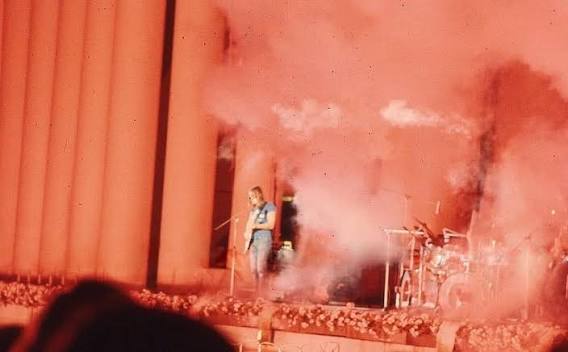
The fireworks are supported by contemporary-era reporting. Looking back on the band’s previous Los Angeles appearance, Billboard’s April 12, 1975 issue specifically mentioned the cloud effects and fireworks used at Hollywood Bowl in 1972.
Another surviving document reveals the preparation behind the show. In an interview with sound engineer Chris Michie, a photograph is identified as the Bowl during setup on September 22. Michie explains that extra high-frequency speaker cabinets were added to help the sound reach the back of the venue. It is a revealing detail: the experience depended on getting the music across a large outdoor space as well as creating something striking to watch.
You Might Also Like






What the amateur film preserves
The Pink Floyd ROIO video catalogue describes a colour 8mm document containing short extracts from Dark Side, “Echoes” and other material, with sound added later. It records camera shake and uneven picture quality, alongside closer views of the musicians.
These fragments give the show a visible human scale: musicians at their instruments, filmed from an audience perspective. The source is incomplete, so an edited video should not be treated as a continuous film of the whole concert. Audio added to silent footage also makes its editing history relevant when judging how closely picture and performance line up.
The careful description is surviving fan-shot footage. Its existence has long been documented; a recently uploaded copy does not, by itself, establish that the underlying film has just been discovered.
Why This Concert Still Matters to Pink Floyd Fans
There is a particular pleasure in hearing an album you know intimately while leaving its familiar studio details behind. A different instrumental passage or an unexpected harmony can make you listen more closely to a song you thought you had exhausted.
Hollywood Bowl offers that kind of encounter. The concert brings the developing Dark Side into contact with an older live repertoire, while its surviving images help connect the music to a specific place and occasion. Together, those records invite a closer look at the choices behind the album.
The fascination with hearing Dark Side in a particular setting has continued long after 1972. Our story about the Dark Side of the Moon eclipse event explores another chapter in that relationship between music, place, and spectacle.
Frequently Asked Questions
When did Pink Floyd play the Hollywood Bowl in 1972?
Pink Floyd performed at the Hollywood Bowl in Los Angeles on September 22, 1972, during their autumn North American tour.
Did they perform The Dark Side of the Moon before its release?
Yes. The concert included a pre-release version of the suite, months before the album appeared in March 1973. Some arrangements differed from the finished recording.
Was Hollywood Bowl the first live performance of Dark Side?
No. Pink Floyd’s official history records an attempted performance at Brighton Dome on January 20, 1972, interrupted by technical trouble, followed by full performances during the subsequent UK tour.
Does film of the Hollywood Bowl concert survive?
Yes. Amateur 8mm footage preserves excerpts of the show. The documented circulating film has added audio and should be understood as a collection of fragments rather than a complete concert film.
Keep Exploring the Dark Side Era
Start with a song you love, compare its live and studio versions, and let the differences guide your next listen. You do not need to collect every recording to enjoy the sense of discovery that these early performances offer.
For another look at the album’s life in fan culture, explore our article on The Dark Side of Oz fan edit. To bring that connection into your everyday collection, browse OtherBrick’s Dark Side of the Moon merchandise and choose a piece that reflects what the music means to you.
Then return to the music that started the story: Pink Floyd Hollywood Bowl 1972.



