
News
Aubrey Powell The Stories Behind Pink Floyd’s Album Art
Aubrey Powell helped give Pink Floyd a visual identity as intriguing as the music itself. Born on September 23, 1946, the Hipgnosis co-founder turned 80 in 2026, a fitting occasion to revisit the photographs, collaborations, and strange visual ideas that made looking at a record sleeve part of listening to it.
Table of Contents
Who Is Aubrey “Po” Powell?
For many Pink Floyd listeners, the name on the record comes first. The people behind its cover enter the story later, often after years of studying a photograph without knowing who stood behind the camera. Aubrey “Po” Powell is one of those people worth getting to know.
Born in Sussex, Powell met Storm Thorgerson and members of the emerging Pink Floyd in Cambridge. Those friendships became working relationships, and his partnership with Thorgerson gave rise to the design studio Hipgnosis.
Po’s place in this history involves photography, design, and creative direction. Understanding those different roles matters: an album sleeve might begin with one person’s idea, develop through conversations, and depend on several specialists to become a finished image. His career offers a particularly vivid way into that collaborative world.
Hipgnosis and Pink Floyd: The Beginning of a Visual Partnership
In 1968, Powell and Thorgerson created their first album cover for Pink Floyd’s A Saucerful of Secrets. It began a relationship that would connect Hipgnosis with some of the band’s most familiar records.
The studio’s work did not follow one fixed visual recipe. Photography, illustration, montage, and other techniques all had a place. What connects so much of it is the invitation to look twice: a familiar object feels unfamiliar, a scene raises a question, or a simple arrangement becomes difficult to forget.
That approach suits the experience of listening to Pink Floyd. You can recognise the surface immediately and still spend time exploring what lies underneath. A sleeve gives the listener something to return to while the music unfolds, without needing to explain every sound or settle every possible interpretation.
Wish You Were Here: Aubrey Powell’s Burning Handshake
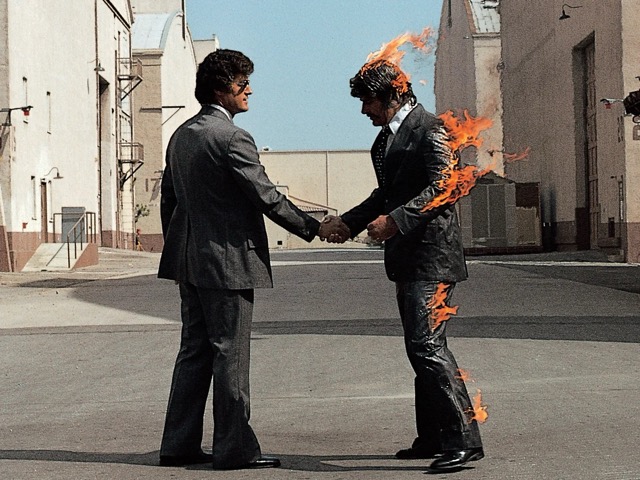
Two men in suits meet for a handshake. One is on fire. The cover of Pink Floyd’s 1975 album Wish You Were Here makes an ordinary gesture feel deeply unsettling, and Powell’s role here is clearly documented: Hipgnosis designed the artwork, and he photographed it.
A Photograph That Belongs to the Album
The record explores absence, isolation, and the insincerity of the music business. Its cover brings those concerns into a scene that looks businesslike until you notice the impossible thing happening within it. The handshake suggests agreement; the flames make that agreement uncomfortable to watch.
For more of the musical context, explore our story behind Pink Floyd’s “Wish You Were Here” and the related tribute at the heart of “Shine On You Crazy Diamond.”
The Fire Was Real
Powell has recalled asking Thorgerson how they could set a man on fire for the image. The answer was to stage it for real. That fact gives the photograph an extra charge: the flames were part of the scene in front of his camera.
Look again at the distance between the figures, their formal clothes, and the casual shape of the gesture. The image offers plenty to consider before anyone tells you what to think. That space for the viewer is part of its continuing appeal.
The Dark Side of the Moon: Understanding the Creative Credits
The prism on The Dark Side of the Moon belongs in any discussion of Hipgnosis and Pink Floyd. Released in 1973, the album carries a graphic image that feels very different from the staged photographic world of the burning handshake.
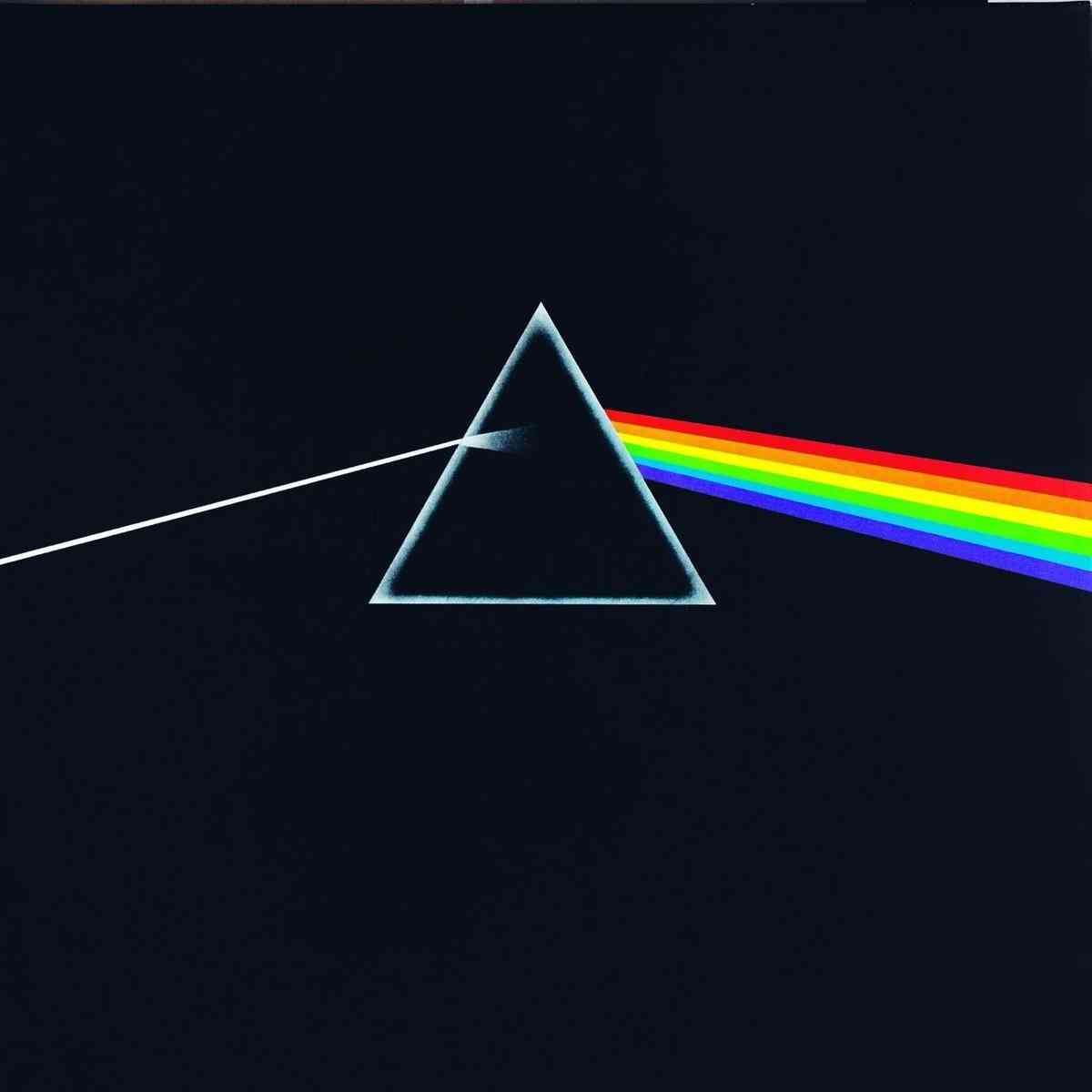
It is important to preserve those distinctions when celebrating Powell. Pink Floyd’s own account identifies Thorgerson’s role in the sleeve and the contribution of graphic artist George Hardie. Describing the prism as Powell’s individual creation would give readers an incomplete picture of how the work came together.
You Might Also Like











Its effect is easy to appreciate even without knowing that history. A beam enters a triangle; colour emerges into darkness. There is very little to look at, yet each element feels necessary. Alongside Hipgnosis’s elaborate photographs, it shows how widely the studio’s visual approach could vary.
The Later Years: A New Landscape for Pink Floyd
The road lined with bending street lamps comes from The Later Years, Pink Floyd’s 2019 box set. It brings Powell’s story forward from the classic Hipgnosis period into a later collaboration, with a different team and a different way of constructing an image.

Powell collaborated with the design studio Johnson Banks on the project. The finished scene combines photographic material with constructed, contorting lamps, bringing an apparently ordinary road into a surreal landscape.
The eye follows the road towards the small figure in the distance, while the lamps keep interrupting its journey. Their strange curves make the surroundings feel responsive, almost alive. For a listener familiar with Pink Floyd’s sleeves, the mixture of open space, human scale, and visual unease feels like a conversation with that earlier artwork.
Why Pink Floyd’s Album Artwork Still Matters to Fans
Try remembering your first encounter with one of these covers. You may remember where you saw it, the format you owned, or the room in which you played the album. Artwork gives those listening memories a visible shape.
The three images also reward different kinds of attention. The handshake asks you to examine a scene. The prism draws you towards a simple arrangement of light and colour. The road encourages your eye to wander into the distance. Displaying them together makes those differences especially clear.
That is one reason album imagery can feel at home beyond the record shelf. If you enjoy building a listening space around your favourite music, explore OtherBrick’s Pink Floyd posters. Choose an image you enjoy spending time with, just as you would choose a record worth playing again.
Frequently Asked Questions About Aubrey Powell
When Is Aubrey Powell’s Birthday?
Aubrey Powell was born on September 23, 1946, in Sussex, England. His 80th birthday fell on September 23, 2026, making this anniversary an opportunity to revisit his long association with Pink Floyd.
Did Aubrey Powell Photograph the Wish You Were Here Cover?
Yes. Powell’s own presentation of the artwork credits the design to Hipgnosis and the photography to him. Keeping both credits makes his contribution clear while recognising the studio collaboration.
Did Aubrey Powell Design The Dark Side of the Moon Alone?
No. The sleeve belongs to Hipgnosis’s collaborative history, with key contributions from Storm Thorgerson and George Hardie. It should not be attributed solely to Powell.
Who Created the Artwork for The Later Years?
The project involved Powell and Johnson Banks. Credits include creative directors Powell and Michael Johnson, designers Beth Johnson and Alice Tosey, photographer Rupert Truman, and Happy Finish for retouching and CGI.
Celebrating Aubrey Powell at 80
The most enjoyable way to mark Po’s birthday may be to slow down with an album you already know. Put on the music, look closely at its sleeve, and notice the decisions that familiarity can make easy to overlook.
A photograph, an illustration, and a constructed landscape each offer a different way into Pink Floyd’s world. Knowing who helped make them adds another layer to that experience. It also gives us a reason to celebrate the photographers, designers, and collaborators whose work has accompanied so many hours of listening.
Explore OtherBrick’s Wish You Were Here collection and revisit the visual legacy of Aubrey Powell.



