
News
The Piper at the Gates of Dawn Album Cover Story (1967-2018)
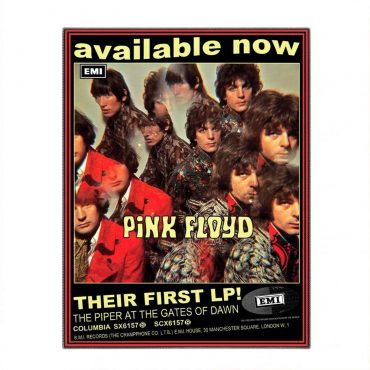
The Piper at the Gates of Dawn album cover, four faces fractured through a prism, floating on a haze of pink and gold, is one of the most recognisable images in psychedelic rock. What most fans never find out is that it was never the only one. Across five decades, Pink Floyd’s 1967 debut has appeared in sleeves that cut songs, credited the wrong photographer, and even put a guitarist on the front who does not play a single note on the record.
Table of Contents
The 1967 Original: A Prism, a Fashion Photographer, and a Gift from George Harrison
Pink Floyd’s debut arrived in the UK on 5 August 1967 on EMI Columbia, recorded at Abbey Road between February and May of that year with producer Norman Smith at the desk. Syd Barrett named it after chapter seven of Kenneth Grahame’s The Wind in the Willows, a quiet, pastoral chapter in a children’s book, attached to one of the strangest records ever handed to a major label.
The sleeve went to Vic Singh, a fashion photographer rather than a rock one, which turned out to be exactly right. Singh shot the band at his studio near London’s Bond Street using a prism lens that George Harrison had given him. The lens split each member into three or four overlapping ghosts of themselves. Nobody airbrushed it afterwards; the effect is entirely in-camera. Barrett turned up in a silk Thea Porter shirt, and the clothes did as much work as the lens; this was a band who looked like they had walked out of a boutique on the King’s Road and straight into another dimension.
Flip the record over, and the psychedelia stops. The back cover carries a simple line drawing by Barrett himself, a piece of handmade whimsy against the kaleidoscope on the front. The original UK pressing was mono, with the stereo mix following roughly a month later.
The US Tower Edition: Same Band, Different Album
America got something else entirely. Tower Records, a Capitol subsidiary, put the record out on 26 October 1967 and simply titled it Pink Floyd; the original name survived only on the back cover. Worse, the tracklist was rebuilt. “Astronomy Domine”, “Flaming” and “Bike” were cut, the non-album single “See Emily Play” was dropped in, and the running order was shuffled around them.
Removing the opening track and the closing track from an album this carefully sequenced is a bold move, and the numbers tell you how it went. The UK edition reached number 6; the Tower version stalled at 131 on the Billboard chart. Generations of American fans grew up with a version of Pink Floyd’s debut that the band never intended, which is part of why the CD era felt like a correction rather than a reissue.
The Italian Edition (1971): A Piper Cover With No Syd Barrett On It
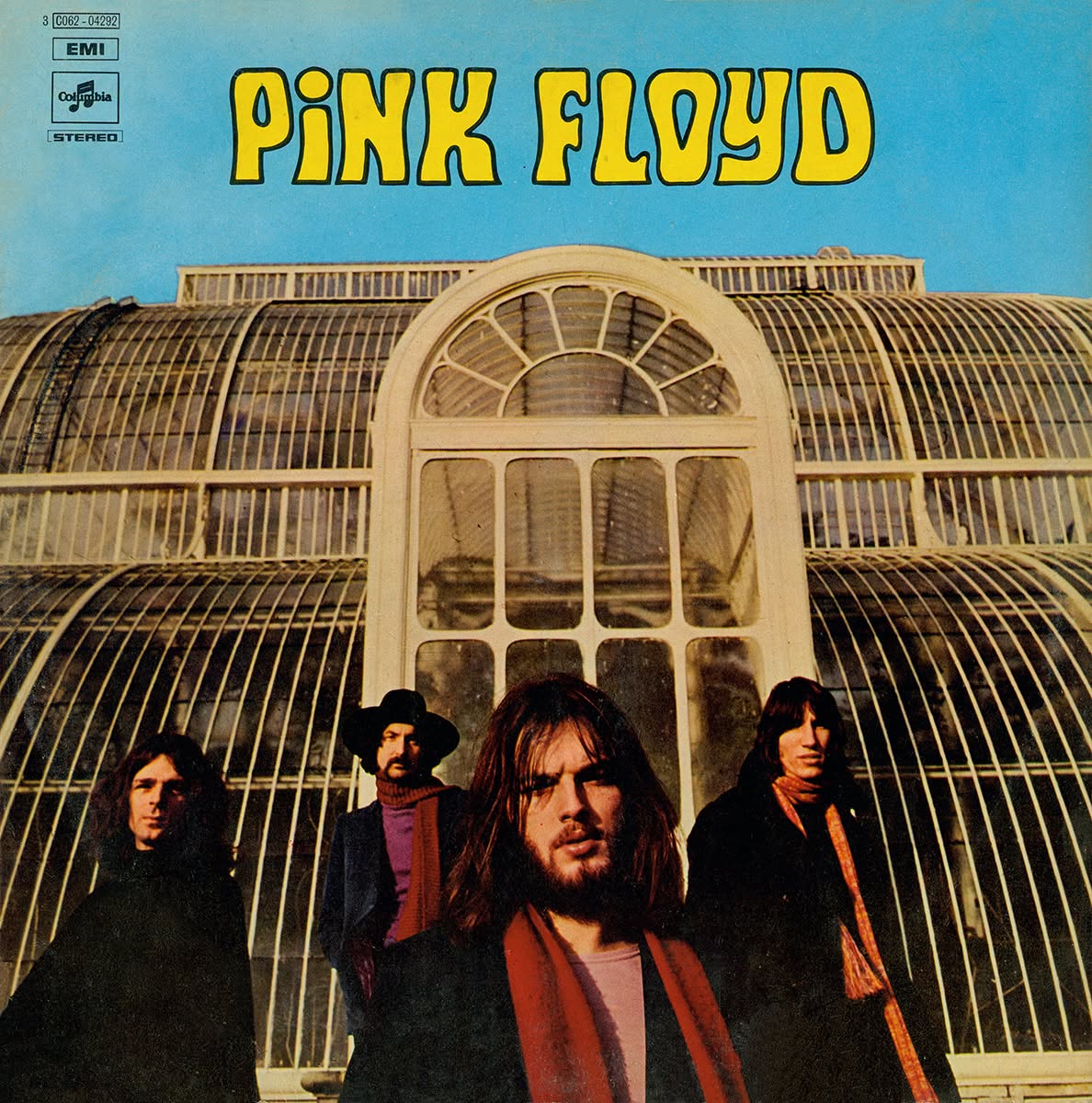
This is the one that makes collectors laugh out loud. Italy did not get the album until 1971, four years late, when EMI Italiana issued it on Columbia with catalogue number 3C 062-04292 and a completely different front cover.
Instead of the prism, you get a straight group photograph: four men in scarves and long coats standing in front of an enormous Victorian glasshouse under a hard blue sky, with “PiNK FLOYD” set above them in fat yellow psychedelic lettering. The building is the Palm House at Kew Gardens in London, and the shoot dates from around 1968, after Barrett had gone.
Which means the man standing front and centre, hair down over his shoulders, staring into the lens, is David Gilmour, who does not appear anywhere on the record inside. Syd Barrett, who wrote eight of the eleven songs and led the band through every session, is not in the photograph at all.
The Italian branch then topped it off: the back cover credits “Front Cover Photo: Vic Singh”. Singh took the UK prism photograph, the one they had chosen not to use. It is a small, perfect piece of record-company carelessness, and it is preserved forever on tens of thousands of sleeves. Original copies now change hands as a genuine rarity, mostly on the strength of that story.
The Record Store Day 2018 Mono Edition
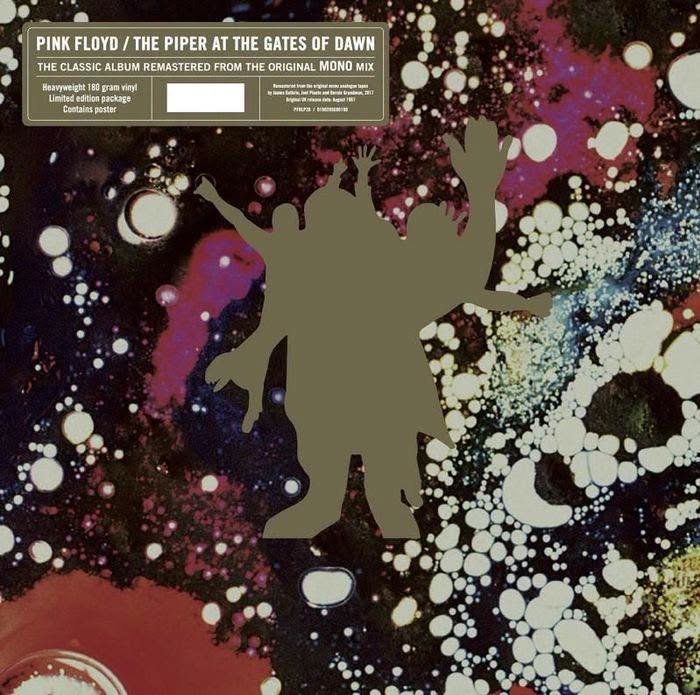
Fifty-one years later, Pink Floyd Records went the other way, back to the source. For Record Store Day on 21 April 2018, the debut was reissued in its original mono form, remastered in 2017 from the mono analogue tapes by James Guthrie, Joel Plante and Bernie Grundman.
You Might Also Like


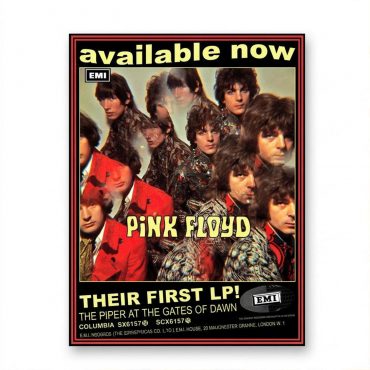
The packaging was the point. Heavyweight 180-gram black vinyl, the sleeve tucked inside a foil-blocked wrap-around outer wallet, and a large fold-out poster on art paper. That poster reproduced the original photograph, taken by the late Colin Prime in Ruskin Park, South London, that inspired Barrett’s back-cover drawing on the 1967 release. It was a strictly limited run, and copies disappeared from shops within hours.
Why fans argue that mono is the better mix
The 1967 stereo mix was an afterthought, assembled quickly at a time when mono was still the format that mattered. The mono mix is the one the band and Norman Smith actually sweated over, and it holds together differently: tighter, denser, with different overdubs and heavier use of phasing on the vocals. It trades the extreme left-right panning that makes “Interstellar Overdrive” feel like a bad trip in headphones for something more focused and physically present. Plenty of listeners now consider it the definitive version of the album.
If you missed the Record Store Day pressing, the same mono master was given a wide release in 2022 in a standard single sleeve, identical audio, none of the deluxe outer wallet or the poster. Collectors chase the 2018 edition for the packaging, not the sound.
Why This Artwork Still Belongs on Your Wall
What makes the Piper sleeves worth collecting is that each one is a snapshot of a different moment: Barrett’s band at its peak in 1967, a label misreading the room in America, an Italian office quietly rewriting history in 1971, and the band’s own archive putting things right in 2018. It is one album with four completely different faces.
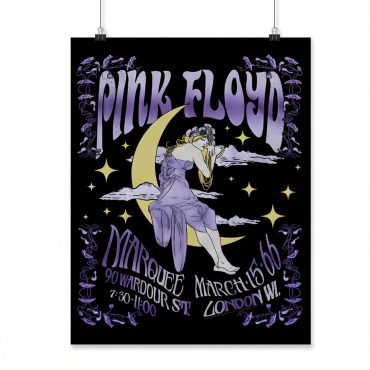
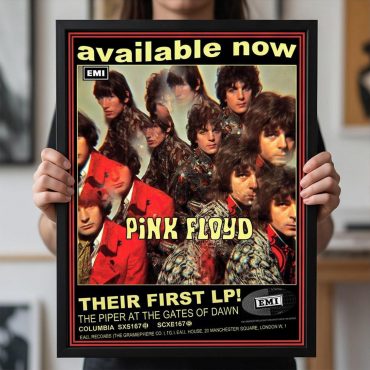
That is also why the imagery works so well off the turntable. The prism portrait has the colour and symmetry of a piece of graphic art, which is why it holds up as a Pink Floyd poster or a stretched canvas print above a record shelf. If you want something you can wear rather than hang, the same early-Floyd imagery translates cleanly onto a Pink Floyd t-shirt, and a Piper design tends to get recognised by exactly the people you want to be recognised by.
For more on the man behind the artwork and the songs, read our piece on Shine On You Crazy Diamond, Floyd’s farewell to Barrett. And if you are figuring out how to actually hang all this, we walk through it in how to decorate your room with Pink Floyd posters.
Frequently Asked Questions
Who photographed The Piper at the Gates of Dawn album cover?
Fashion photographer Vic Singh shot the original 1967 sleeve at his studio near Bond Street in London, using a prism lens given to him by George Harrison. The back cover drawing was by Syd Barrett.
Where was the Italian Piper at the Gates of Dawn cover photo taken?
At Kew Gardens in London, in front of the Palm House. The session took place around 1968, after Barrett had left the band, and the photograph was used for the Italian edition released in 1971.
Why is David Gilmour on the cover of a Syd Barrett album?
Because the Italian branch of EMI used a current publicity photograph rather than the 1967 artwork. Gilmour joined Pink Floyd in December 1967, months after the album was finished, and does not perform on it. The same sleeve also credits Vic Singh for a photograph it does not contain.
Is the mono version of Piper better than the stereo?
Many fans think so. The mono mix was the primary mix in 1967 and received far more attention than the hurried stereo version, with different overdubs and phasing effects. The 2017 mono remaster used for the 2018 Record Store Day pressing is the easiest way to hear it on vinyl.
Which Piper edition is the rarest?
The 1971 Italian pressing with the Kew Gardens sleeve is the hardest of the standard commercial editions to find in good condition, and the 2018 Record Store Day mono package is the most sought-after modern release.
One Album, Four Faces
Sixty years on, Pink Floyd’s debut still refuses to sit still. The prism, the butchered American tracklist, the wrong band at Kew Gardens, the mono tapes finally given the treatment they deserved, every edition tells you something about how the world was trying, and often failing, to package Syd Barrett. If the artwork means as much to you as the music, the story of The Piper at the Gates of Dawn album cover deserves a place on your wall: browse the full Pink Floyd poster and print collection at OtherBrick.



